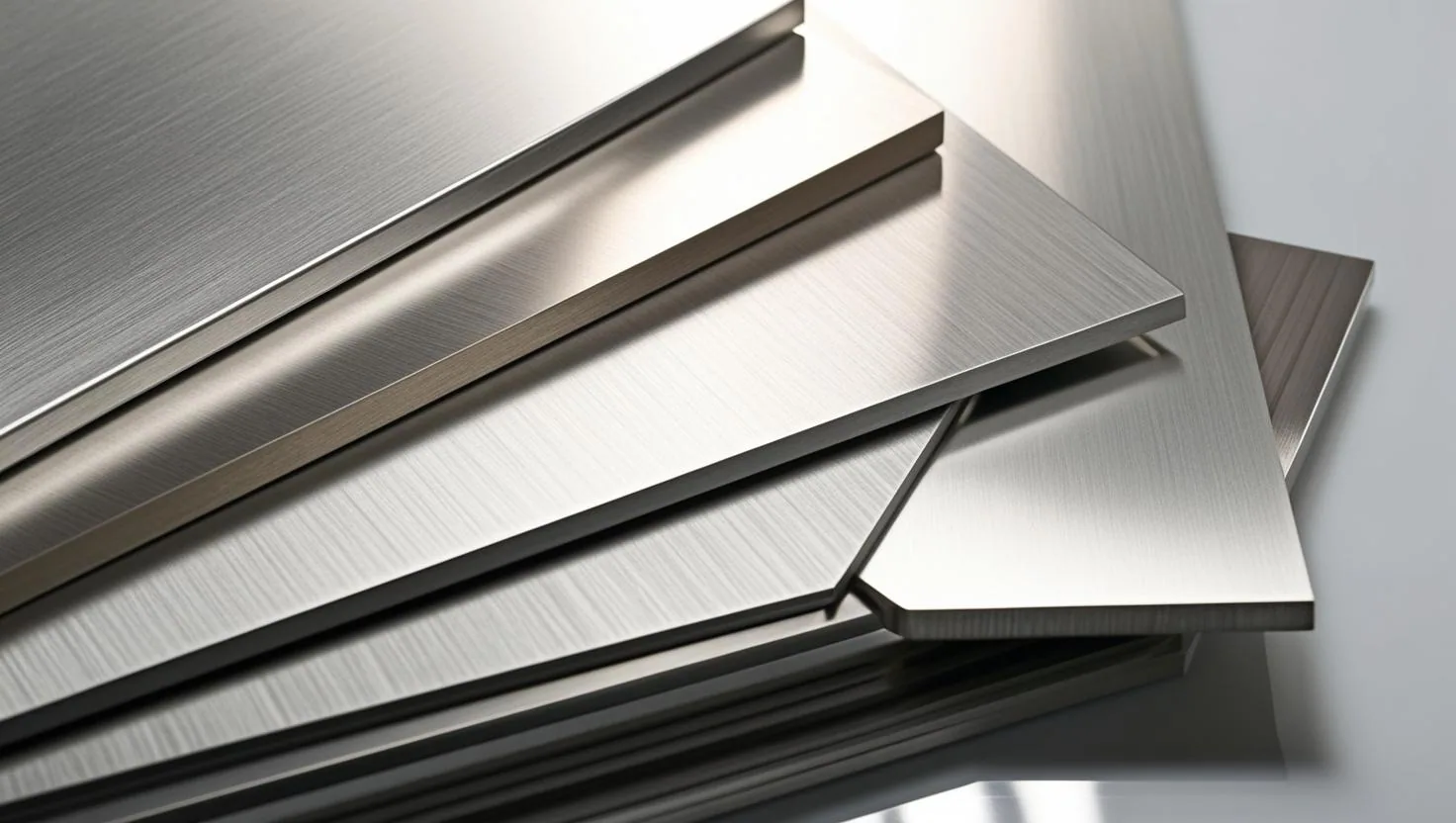
Aurico Alloys LLP stocks sheet from 0.2 mm to 4.75 mm thick in nickel alloys, titanium, duplex and super duplex stainless, resistance-heating alloys and cobalt alloys, cut to size from our warehouses in Mumbai and Kalamboli, Navi Mumbai. Every grade below has its own page with composition, mechanical properties and the specifications it is supplied to.
If you already know the grade, go straight to it from the lists below. If you are still choosing, the sections after them cover the thickness boundary between sheet and plate, the specifications that govern each alloy family, and how finish and tolerance are called up on an order.
Titanium & Titanium Alloy Sheets
Special Stainless Steel Sheets
Duplex Steel Sheets
Cobalt Alloy Sheets
Monel Sheets
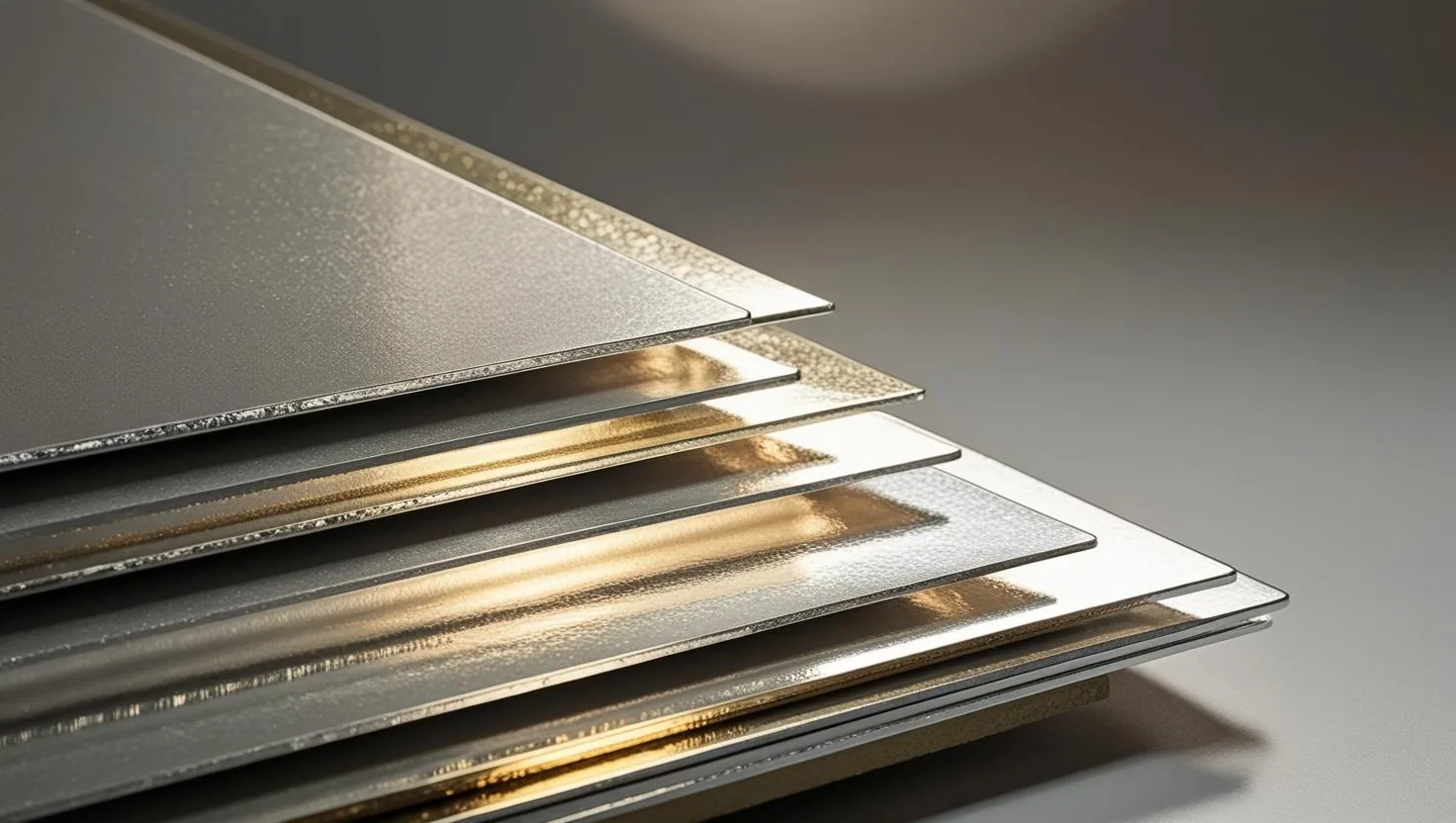
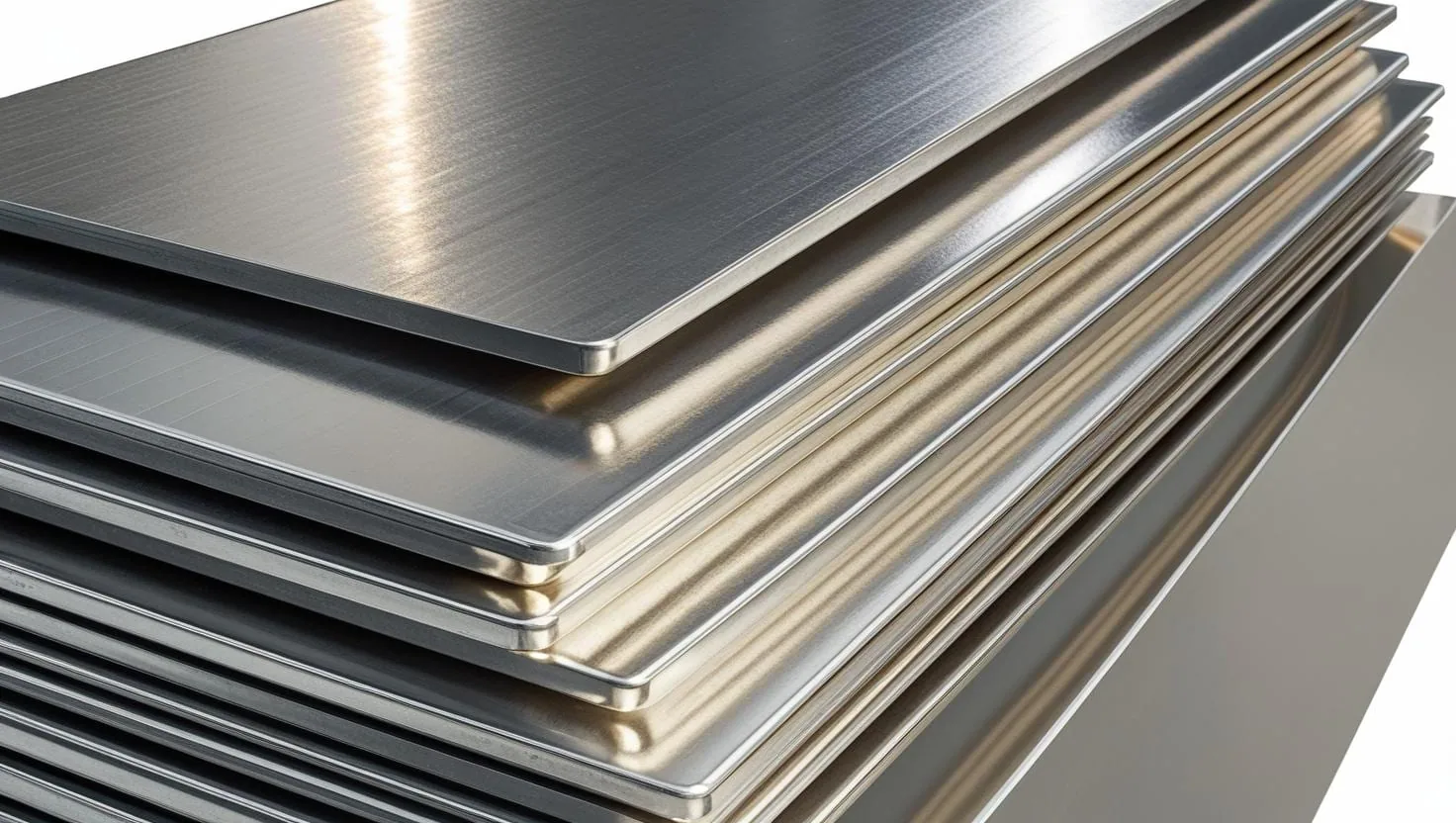
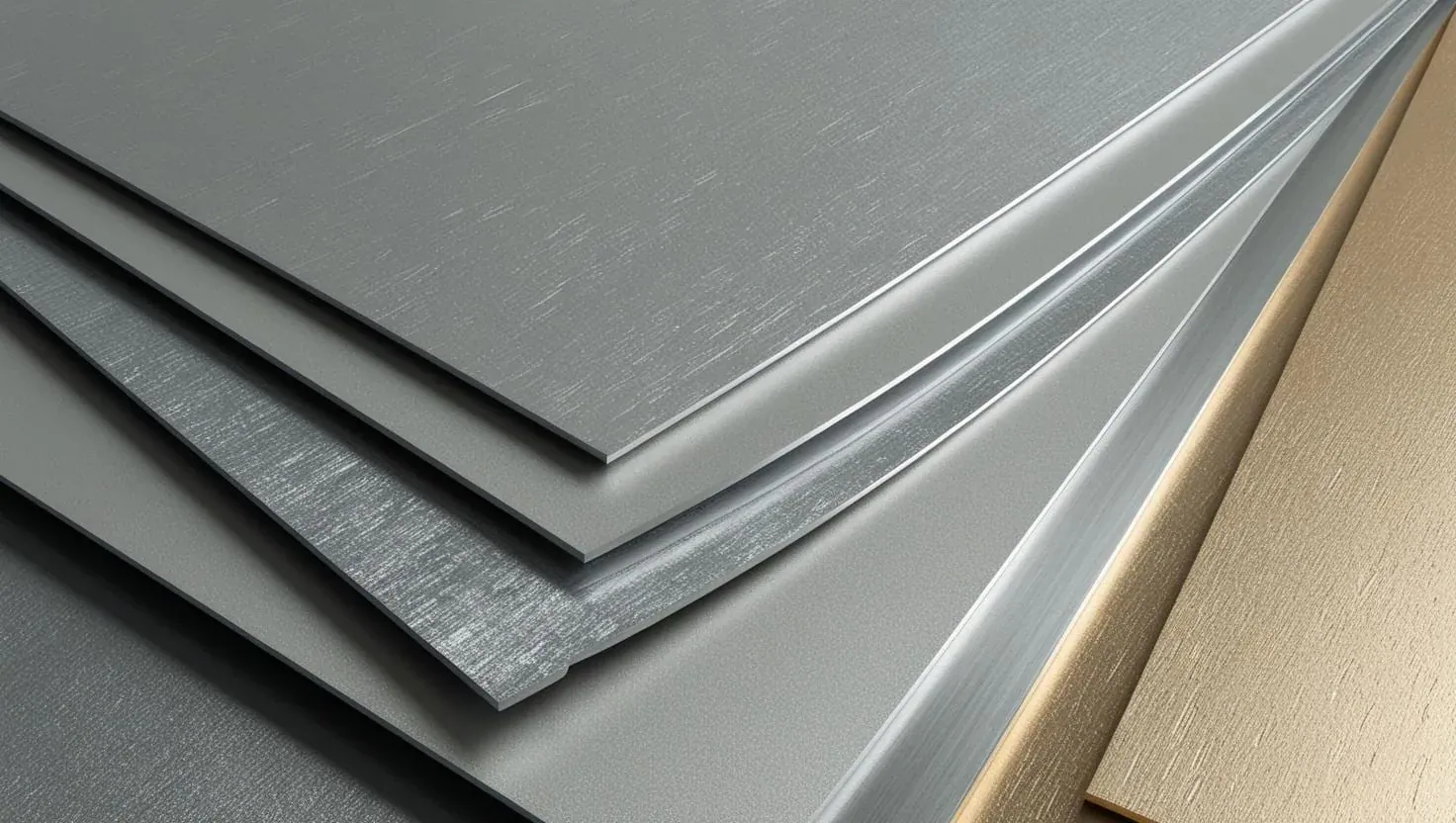
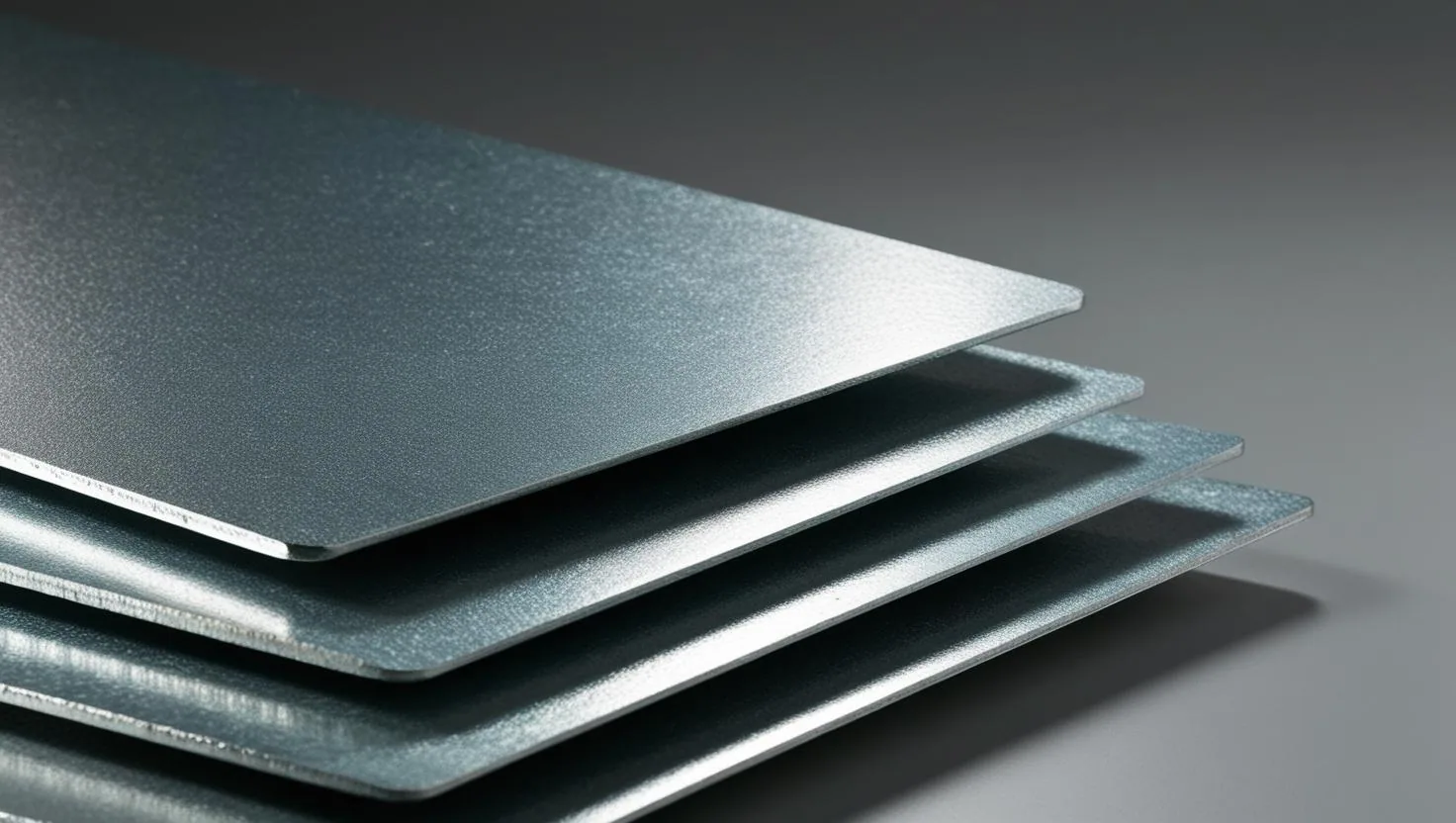
Sheet or Plate? The Thickness Boundary
The difference is defined by thickness, not by use, and the dividing line is the same 4.75 mm (0.1875 in, or 3/16 in) across the material standards this site quotes. Below it the mill calls the product sheet; at or above it, plate. Enquiries that ask for "3 mm plate" or "8 mm sheet" get re-quoted against the correct standard, which costs a day, so it is worth naming the thickness rather than the word.
| Form | Thickness | Typically supplied as |
|---|---|---|
| Foil | Under 0.15 mm | Slit coil or cut lengths |
| Strip | 0.15 mm to 4.75 mm, under 600 mm wide | Coil, slit to width |
| Sheet | Under 4.75 mm, 600 mm wide and over | Cut lengths from coil, or discrete sheets |
| Plate | 4.75 mm and over | Discrete plate, cut to size |
Width matters as well as thickness. The same 2 mm material is strip below 600 mm wide and sheet at 600 mm and over, and it is ordered against different tolerance tables in each case.
Specifications by Alloy Family
Sheet is bought against a product specification, which fixes the chemistry, the mechanical minima and the permitted tolerances together. These are the specifications that govern sheet in each family we stock. Quote the one your drawing calls up and the mill certificate will be issued against it.
| Family | Grades | Sheet specification |
|---|---|---|
| Commercially pure nickel | Nickel 200, Nickel 201 | ASTM B162 |
| Nickel-copper | Monel® 400, K-500 | ASTM B127 |
| Nickel-chromium-iron | Inconel® 600, 601, 690, 617 | ASTM B168 |
| Nickel-chromium-molybdenum-niobium | Inconel® 625, 625 LCF | ASTM B443 |
| Iron-nickel-chromium | Incoloy® 800, 800H, 800HT | ASTM B409 |
| Nickel-iron-chromium-molybdenum-copper | Incoloy® 825 | ASTM B424 |
| Low-carbon nickel-chromium-molybdenum | Hastelloy® C-276, C-22, C-2000, Alloy 59 | ASTM B575 |
| Nickel-molybdenum | Hastelloy® B-2, B-3 | ASTM B333 |
| Nickel-chromium-tungsten | Hastelloy® X, Haynes® 230 | ASTM B435 |
| Titanium and titanium alloys | Grades 1, 2, 3, 4, 5, 7, 9, 11, 12, 16, 23 | ASTM B265 |
| Duplex and super duplex | 2205, 2507, 32750, 32760 | ASTM A240 |
| Super austenitic stainless | 904L, 254 SMO, AL-6XN, Alloy 31 | ASTM A240 / ASTM B625 |
| Nickel-iron-chromium acid resistant | Alloy 20 | ASTM B463 |
| Cobalt-chromium-tungsten | Haynes® 25 (L-605) | ASTM F90 / AMS 5537 |
| Resistance heating | Nichrome, NiCr 80:20, 70:30, 60:15, 40:20, 30:20, 20:25 | ASTM B344 |
| Controlled expansion | Invar 36, Kovar | ASTM F1684 |
| Soft magnetic | Mu-metal | ASTM A753 |
Where a pressure vessel code applies, the ASME equivalent carries an S prefix and the same number: ASTM B443 becomes ASME SB-443, ASTM A240 becomes ASME SA-240. The material is the same; the code stamp is what differs.
Surface Finish and Edge Condition
Finish is set by how the sheet leaves the mill, and it is not cosmetic. It governs how the surface behaves in service, how well it passivates, and how it takes a weld or a polish afterwards.
| Finish | Route | Where it is specified |
|---|---|---|
| No. 1 | Hot rolled, annealed, descaled | Heavier gauges, structural and general fabrication where the surface is not critical |
| 2D | Cold rolled, annealed, pickled | Dull matt surface, good for deep drawing and where a coating follows |
| 2B | Cold rolled, annealed, pickled, skin passed | The default for process plant: smoother than 2D, passivates well |
| BA | Bright annealed in a controlled atmosphere | Reflective, no pickling scale; pharmaceutical and high-purity service |
| No. 4 | Mechanically polished | Visible architectural and food-contact surfaces |
Edges are supplied as mill edge or slit edge as standard. Sheared, laser-cut and waterjet-cut edges are available; waterjet avoids the heat-affected zone that matters on the corrosion-resistant grades, which is why it is usually the right choice on Hastelloy® and the super austenitics.
Choosing a Family by Service Condition
Most sheet enquiries come down to one dominant service condition. This is the short version of how the families above divide up.
| Service condition | Families to look at first |
|---|---|
| Reducing acids: hydrochloric, sulphuric, phosphoric | Hastelloy® B-2 and B-3 in pure reducing service; C-276, C-22 and Alloy 59 where the acid is mixed or the oxidation state changes |
| Oxidising acids: nitric, chromic | Titanium Grades 1 to 4; Alloy 20 in sulphuric |
| Chlorides, seawater, brine | Super duplex 2507 and 32760, 254 SMO, AL-6XN; titanium Grades 7, 11 and 16 where crevice corrosion governs |
| High temperature oxidation and creep | Inconel® 601, 617 and 693; Incoloy® 800H and 800HT; Hastelloy® X and Haynes® 230 |
| High strength at temperature | Inconel® 718, X-750 and 625; Nimonic® 80A, 90 and 263 |
| Electrical resistance heating | NiCr 80:20 and 70:30 for element work; 60:15 and 40:20 where cost governs |
| Dimensional stability across temperature | Invar 36; Kovar where a glass or ceramic seal is involved |
| Magnetic shielding | Mu-metal |
| Seawater and hydrofluoric acid | Monel® 400 and K-500 |
Where two families both work, the decision is usually fabrication rather than corrosion: how the sheet welds, whether it needs post-weld heat treatment, and whether the grade is available in the thickness you want without a mill run.
What to Include in a Sheet Enquiry
Quoting is faster when the enquiry carries these six things. The first three fix the price; the last three fix whether the material is usable when it arrives.
- Grade and specification — for example Inconel® 625 to ASTM B443, or duplex 2205 to ASTM A240. The specification matters as much as the grade.
- Thickness, width and length — in millimetres, with the tolerance standard if your drawing calls one up.
- Quantity — in pieces or kilograms. Sheet is priced per kilogram and cut from stock, so a part sheet is quoted differently from a full one.
- Finish and edge — 2B, BA, No. 1 or polished; mill edge or cut.
- Certification — EN 10204 3.1 is supplied as standard. Specify 3.2 if a third-party inspector must countersign, and name the inspection body.
- Any supplementary testing — intergranular corrosion testing to ASTM A262 or G28, ferrite count on duplex, ultrasonic testing, or a positive material identification report.
Material is sheared, laser or waterjet cut, slit or sawn to size before despatch, and every consignment carries an EN 10204 3.1 mill test certificate. More on quality and certification, or send us an enquiry.
Other Product Forms
The same grades are stocked in other forms. If sheet is not what the job needs: