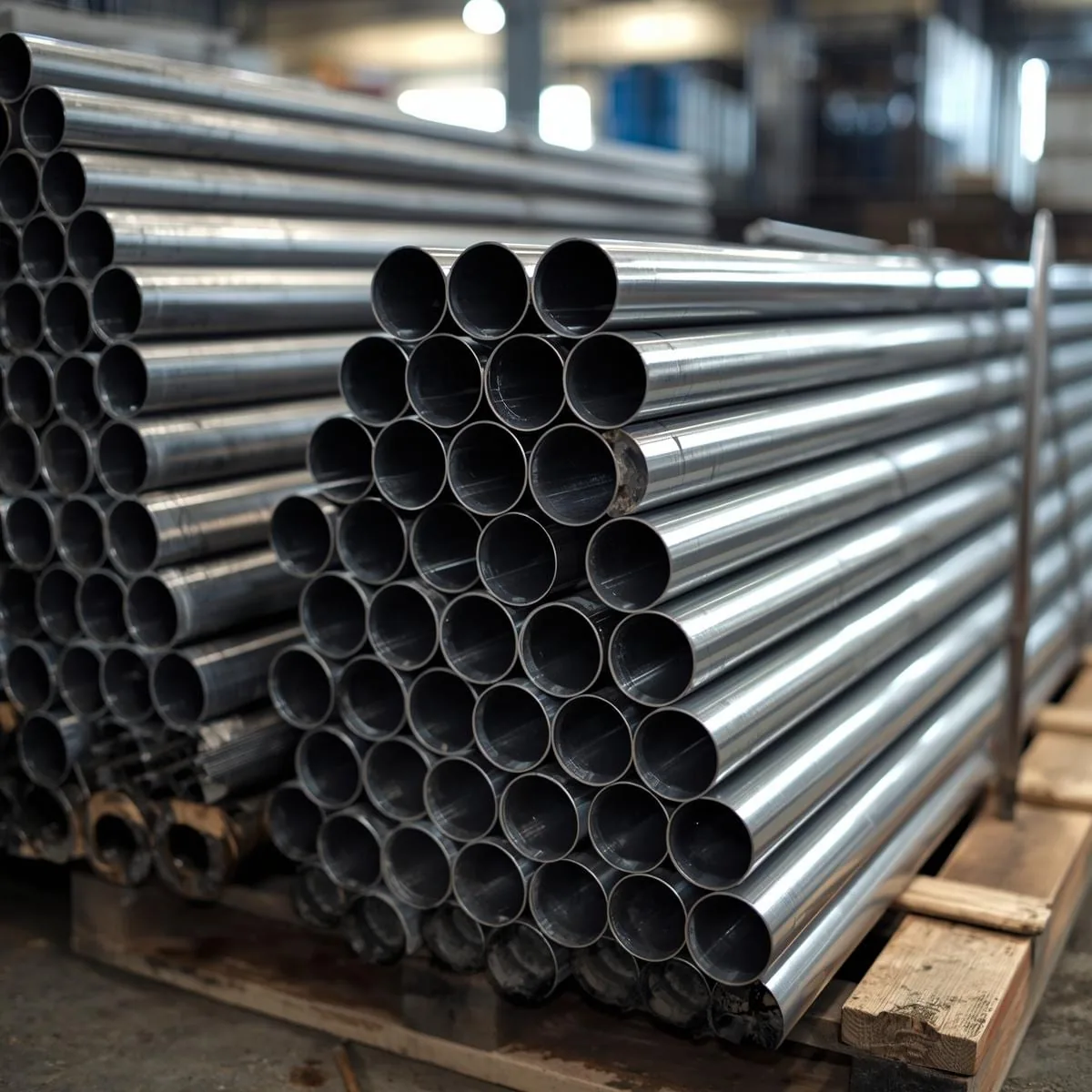
Incoloy® Pipes for Corrosive, High-Temperature, and Reliability-Critical Process Systems
Table of Contents:
The failure pattern behind many upgrade decisions
In real plants, piping failure often begins as a materials mismatch rather than a design mistake: chloride stress corrosion, sulfur-bearing attack, intergranular sensitization, or oxidation-driven scaling gradually reduce reliability until the line becomes a maintenance liability.
That is why buyers in aggressive service frequently move from commodity stainless grades to Incoloy® Pipes, especially when the line must handle both heat and corrosive chemistry over long operating cycles.
Incoloy 825 is especially valued because its nickel-iron-chromium matrix with molybdenum, copper, and titanium is designed to resist both oxidizing and reducing environments while also improving resistance to chloride stress corrosion cracking.
Specifications and standards
Incoloy® Pipes are commonly ordered in seamless and welded forms under ASTM and ASME standards such as ASTM B407 for Alloy 800-family pipe, ASTM B423 for Alloy 825 seamless pipe and tube, ASTM B514 for welded Alloy 825 pipe, and ASTM B705 for welded alloy pipe intended for broader industrial service requirements.
Across project documentation, the most frequently referenced UNS grades are UNS N08800 for Incoloy 800, UNS N08810 for Incoloy 800H, UNS N08811 for Incoloy 800HT, and UNS N08825 for Incoloy 825.
DIN and Werkstoff references remain important for export and European alignment, with Incoloy 825 commonly associated with W.Nr. 2.4858 and Incoloy 800 widely linked with W.Nr. 1.4876 in commercial trade practice.
| Grade | UNS | Common ASTM / ASME | DIN / EN Reference |
|---|---|---|---|
| Incoloy 800 | UNS N08800 | ASTM B407 / ASME SB407 | W.Nr. 1.4876 in trade usage |
| Incoloy 800H | UNS N08810 | ASTM B407 / ASME SB407 | Commercial DIN / EN references vary by mill |
| Incoloy 800HT | UNS N08811 | ASTM B407 / ASME SB407 | Commercial DIN / EN references vary by mill |
| Incoloy 825 | UNS N08825 | ASTM B423, ASTM B514, ASTM B705 / ASME SB423 | DIN / W.Nr. 2.4858 |
Specifications by Grade – Pipe and tube
A specification is written for a product form. The standards below are the ones that cover pipe and tube; the plate, bar and tube specifications for these grades are different documents and are listed on their own pages.
| Grade | UNS | Pipe and tube specification |
|---|---|---|
| DS | N08330 | ASTM B535 / B546 / B710 / B739 |
| 800 | N08800 | ASTM B163 / B407 / B829 |
| 800H | N08810 | ASTM B163 / B407 / B829 |
| 800HT | N08811 | ASTM B163 / B407 / B829 |
| 825 | N08825 | ASTM B163 / B423 / B829 |
| 890 | N08890 | ASTM B407 |
| 660 (A286) | S66286 | AMS 5731 / 5732 / 5734 / 5737 |
Equivalent grades and grade positioning
In procurement practice, buyers usually compare the Incoloy family by service profile: Incoloy 800 for high-temperature structural stability, Incoloy 800H and 800HT for elevated-temperature creep and rupture strength, and Incoloy 825 for mixed corrosion service involving acids, chlorides, sulfur compounds, and seawater exposure.
Equivalent-grade communication typically combines the trade name, UNS number, ASTM or ASME standard, and DIN or EN-style material number so engineering, inspection, and purchasing teams all work from the same material identity.
How buyers generally shortlist them
- Incoloy 800: chosen for oxidation resistance and structural reliability at elevated temperature.
- Incoloy 800H / 800HT: preferred where higher creep strength matters in prolonged hot service.
- Incoloy 825: selected for stronger corrosion resistance in wet, acidic, chloride-bearing, and sulfur-rich duty.
Product forms and availability
Commercial Incoloy® Pipes are offered as seamless, welded, fabricated, and project-cut lengths, with availability typically spanning small-bore process pipe through larger OD welded pipe for plant, marine, and refinery service.
Published Alloy 825 supply ranges include stock NB sizes from 1/8 inch to 8 inch, schedules from SCH 5 to SCH 160, seamless sizes up to about 203.2 mm, and welded sizes extending to around 1219.2 mm depending on mill route and fabrication capability.
For integrated assemblies, fabricators often combine pipe procurement with compatible forged or machined components, including related products such as Incoloy hex bars where stems, fasteners, adapters, or valve support parts must match the broader corrosion-resistance envelope.
Chemical composition
Among all commercial Incoloy piping grades, Incoloy 825 is the most closely examined in corrosive process purchasing because its chemistry is intentionally balanced for resistance to acids, chlorides, and reducing environments.
| Element | Incoloy 825 Typical Range |
|---|---|
| Nickel (Ni) | 38.00% - 46.00% |
| Chromium (Cr) | 19.50% - 23.50% |
| Molybdenum (Mo) | 2.50% - 3.50% |
| Copper (Cu) | 1.50% - 3.00% |
| Iron (Fe) | 22.00% minimum |
| Titanium (Ti) | 0.60% - 1.20% in cited commercial data |
| Carbon, Manganese, Silicon, Sulfur, Aluminum | Controlled to low limits for process consistency |
This alloy design is important because nickel supports chloride stress-corrosion resistance, copper improves resistance in reducing acids, molybdenum helps pitting and crevice performance, and titanium stabilizes the alloy against harmful sensitization effects.
Mechanical and physical properties
For specification review, Alloy 825 pipe is commonly cited with tensile strength around 85 ksi or 586 MPa, yield strength around 35 ksi or 241 MPa, and elongation near 30% in the annealed condition, giving buyers a useful balance of ductility and structural reliability.
| Property | Incoloy 825 Reference Value |
|---|---|
| Tensile Strength | 85 ksi / 586 MPa |
| Yield Strength | 35 ksi / 241 MPa |
| Elongation | 30% |
| Density | 8.14 g/cm³ |
| Melting Range | 1370°C - 1400°C |
| Useful Service Range | Reported useful properties up to about 1000°F / 538°C in one reference context |
What these numbers mean in practice
For many process systems, the value of Incoloy lies less in extreme strength than in stable, dependable performance under corrosive and thermally variable service, where lifecycle reliability matters more than short-term price.
Applications by industry
Chemical processing
In chemical plants, Incoloy pipes are widely used for acid-handling systems, heat exchangers, pickling equipment, and process lines because Alloy 825 is specifically recognized for resistance in both oxidizing and reducing environments.
Oil and Gas
Oil and gas users value Incoloy 825 in offshore and onshore systems exposed to seawater, acidic gases, sulfur compounds, and chloride-bearing conditions, where longer service life can justify the alloy premium over standard stainless materials.
Marine
Marine systems benefit from Incoloy’s resistance to pitting, crevice attack, and chloride stress corrosion cracking, which is particularly relevant in salt-rich service where 304 or 316 may not provide enough durability margin.
Pharma
In pharmaceutical and clean-process systems, buyers appreciate the alloy family’s combination of corrosion resistance, weldability, and stable performance in lines that must endure repeated cleaning, thermal cycling, and strict material traceability.
Power generation
Power and thermal service applications use Incoloy 800, 800H, and 800HT for boiler components, superheaters, reforming furnace tubes, and heat-intensive systems because these grades are designed for high-temperature oxidation resistance and better creep-related stability than ordinary stainless steels.
OEM manufacturers, fabricators, and supply chains
OEMs and fabricators choose Incoloy pipes when they need a weldable alloy platform that aligns with ASTM, UNS, DIN, and EN-based procurement language, while procurement heads and industrial supply stores benefit from standardized documentation that simplifies quoting, inspection, and export packing.
Comparison with commonly used grades
Most buyers compare Incoloy against 304/316 stainless steel first, and then against higher-cost nickel alloys, to judge whether the corrosion and temperature profile actually requires an upgrade.
| Material | Main Advantage | Main Limitation | Typical Buyer Use Case |
|---|---|---|---|
| 304 / 316 Stainless Steel | Lower initial cost and broad availability | Lower resistance in sulfuric, chloride-rich, or mixed corrosive service than Incoloy 825 | Used where service is moderate and cost sensitivity is high |
| Incoloy 800 / 800H / 800HT | Better high-temperature oxidation and structural stability | Not the first choice where wet corrosion resistance is the main concern | Chosen for furnace, boiler, and hot process systems |
| Incoloy 825 | Strong resistance to oxidizing and reducing acids, seawater-related exposure, and chloride SCC | Higher material cost than commodity stainless | Chosen for chemical, offshore, and severe process lines |
| Higher Nickel Superalloys | Can offer stronger elevated-temperature or extreme corrosion performance in niche conditions | Often higher cost and not always necessary for mainstream process service | Specified only when engineering conditions clearly exceed Incoloy’s envelope |
In practical buying terms, Incoloy is often the smart middle ground: more capable than stainless in aggressive service, yet often more commercially rational than moving straight to a top-tier superalloy system.
EEAT signals: testing, compliance, and export readiness
In B2B nickel alloy procurement, trust is built through documentation and inspection, not just product naming, which is why serious buyers expect heat traceability, test reports, and full material identification before release.
Commercial references for Alloy 825 pipe list expectations such as EN 10204 / 3.1-style certification, raw material certificates, 100% radiography test reports, and third-party inspection reports, all of which strengthen procurement confidence for export and project approval.
Typical compliance and QA expectations
- Mill Test Certificates with UNS, ASTM, heat number, and chemistry traceability.
- Dimensional inspection, hydro testing, and radiography as project requirements demand.
- PMI and third-party inspection for critical orders and export-oriented supply chains.
- Marking, packing, and documentation aligned to global industrial shipment practice.
Industry relevance and market logic
Even a limited amount of downtime in refining, power, or specialty chemical service can outweigh the original cost difference between stainless steel and a nickel alloy pipe package, which is why alloy upgrades are usually driven by risk economics rather than just metallurgy.
That commercial logic keeps Incoloy relevant across sectors where corrosion, heat, and reliability converge, especially for buyers who must justify performance to operations, maintenance, and procurement teams at the same time.
Where matching machined hardware is required, buyers may also consider a compatible product such as duplex steel hex bars or Incoloy hex bars for stems, supports, or threaded accessories used alongside the piping package.
Frequently asked questions
Global Export Destinations
We ship worldwide from Mumbai. See every destination we export to on our export markets page.
Domestic Supply Network
We deliver across India from our Mumbai stockyard. See every city we supply on our supply locations page.
Conclusion
Incoloy® Pipes remain a trusted choice for buyers who need code-recognized nickel alloy piping that balances corrosion resistance, temperature capability, fabrication practicality, and documentation-ready compliance for demanding industrial service.
If your next project involves acids, chlorides, sulfur-bearing media, thermal cycling, or uptime-critical process lines, wouldn’t it make sense to specify a pipe alloy that is designed to keep working when standard materials begin to lose margin?