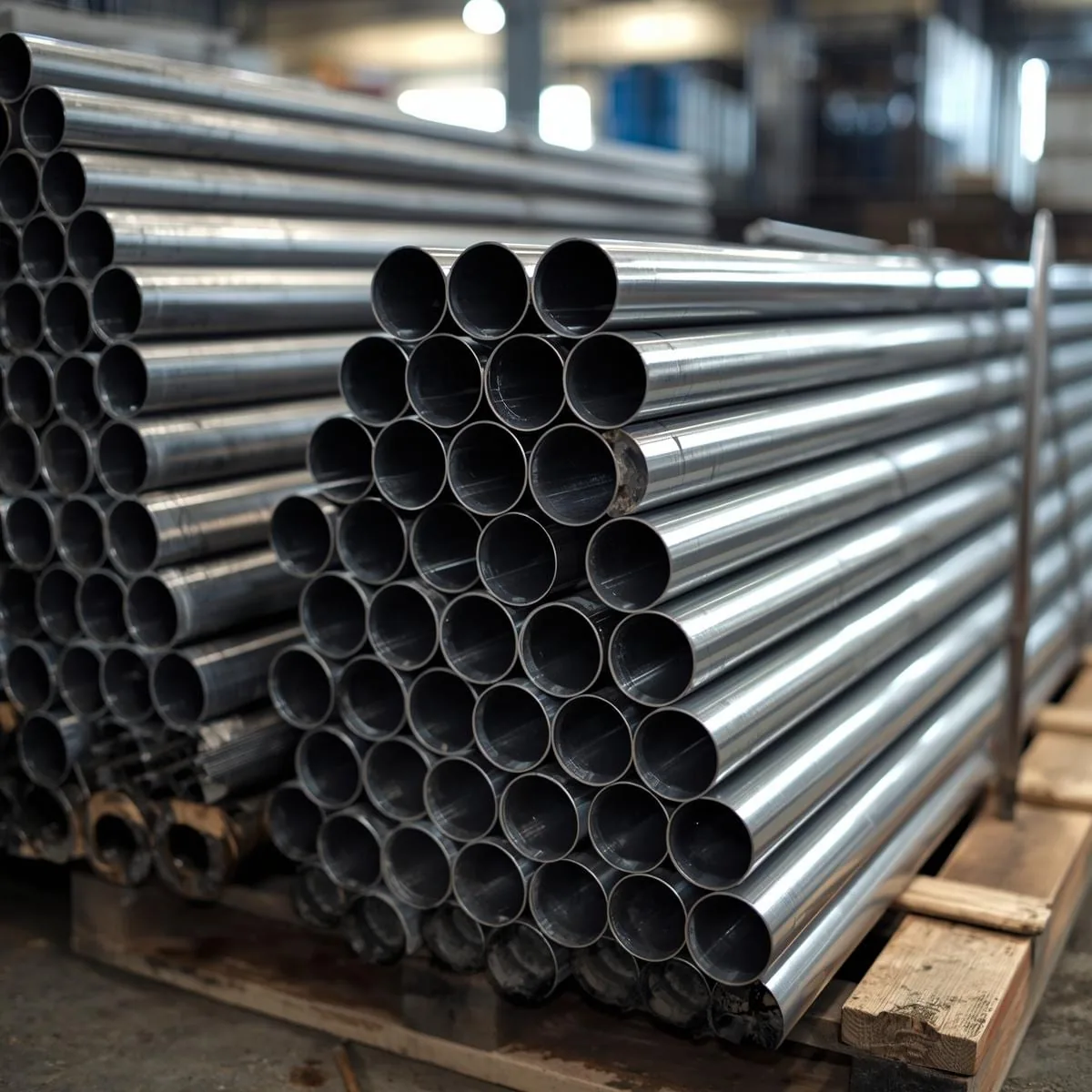
Haynes® Alloy Pipes for High-Temperature, Corrosion-Resistant, and Mission-Critical Industrial Service
Table of Contents:
In real plant service, high-temperature piping failure rarely begins with one dramatic event; it usually starts with oxidation scale growth, carburization, nitriding, sulfate deposit attack, or hot corrosion that slowly erodes reliability until shutdown or replacement becomes unavoidable.
That is why engineers in power generation, petrochemicals, and severe thermal processing move toward Haynes alloys when they need a pipe material that keeps strength, weldability, and environmental resistance over prolonged exposure.
HAYNES 230 is especially noted for high-temperature strength and oxidation resistance up to about 2100°F or 1149°C, while HAYNES 188 is recognized for resistance to oxidizing environments up to about 2000°F or 1095°C along with strong sulfate deposit hot-corrosion resistance.
Specifications and standards
Haynes® Alloy Pipes are usually specified through a combination of UNS grade, seamless or welded pipe standard, and the exact high-temperature alloy family because service performance varies significantly by chemistry and product form.
For HAYNES 230, project and trade documentation commonly align with UNS N06230 and pipe standards such as ASTM B622 for seamless pipe and tube, ASTM B619 for welded pipe, and ASTM B626 for welded tube in nickel and nickel-cobalt alloy systems.
For HAYNES 188 (UNS R30188), Haynes publishes AMS 5608 for sheet, plate and strip and AMS 5772 for bar, but no pipe or tube standard, so a 188 pipe enquiry needs the project's own specification.
DIN and EN references vary by specific alloy and supplier documentation, but buyers usually expect the material certificate to clearly show the UNS number, product standard, chemistry range, and any relevant European material cross-reference where requested.
| Haynes Alloy Grade | UNS | Common ASTM / AMS Reference | DIN / EN Note |
|---|---|---|---|
| HAYNES 230 | UNS N06230 | ASTM B622, ASTM B619, ASTM B626 in nickel alloy pipe/tube practice | W.Nr. 2.4733, EN NiCr22W14Mo |
| HAYNES 188 | UNS R30188 | AMS 5608 (sheet, plate and strip); no pipe or tube standard | W.Nr. 2.4683 |
| Price | INR 5,000 – 15,000 per kg. Indicative USD 60 – 175 per kg; quoted against grade, form, size and quantity. |
Specifications by Grade – Pipe and tube
A specification is written for a product form. The standards below are the ones that cover pipe and tube; the plate, bar and tube specifications for these grades are different documents and are listed on their own pages.
| Grade | UNS | Pipe and tube specification |
|---|---|---|
| 230 | N06230 | ASTM B619 / B622 |
| 242 | N10242 | ASTM B619 / B622 |
| 556 | R30556 | ASTM B619 / B622 |
| HR-160 | N12160 | ASTM B619 / B622 |
Equivalent grades and grade positioning
Haynes alloys are usually shortlisted by operating environment rather than only by nominal grade: HAYNES 230 for long-term high-temperature oxidation and nitriding resistance in nickel-based service, and HAYNES 188 for very high-temperature strength plus sulfate-deposit hot-corrosion resistance in cobalt-based service.
From a buyer’s perspective, HAYNES 230 competes with premium nickel-chromium-tungsten-molybdenum alloys used in process heaters and gas turbines, while HAYNES 188 competes with cobalt-based hot-section alloys selected for severe combustor and exhaust environments.
How procurement teams often differentiate them
- HAYNES 230: chosen for high-temperature oxidation resistance, thermal stability, and fabricability in long-duration heat service.
- HAYNES 188: chosen for very good oxidation resistance, hot-corrosion resistance, and strong performance in gas-turbine-style environments.
Product forms and availability
Commercially, Haynes alloy materials are supplied in forms that include seamless pipe, welded pipe, tube, sheet, plate, bar, and fabricated hot-section components, depending on alloy family and project route.
For buyers in OEM and fabrication environments, this broad availability matters because piping packages often include matching fittings, ducting, bellows, thermocouple sheaths, and machined parts from the same alloy system.
Where material continuity across a hot assembly is important, buyers may also pair the pipe package with a related forged product such as Inconel hex bars or Haynes alloy hex bars for supports, machined connectors, or high-temperature accessories used nearby.
Chemical composition
Among the Haynes grades commonly evaluated for high-temperature piping, HAYNES 230 and HAYNES 188 provide a useful comparison because one is nickel-based and the other is cobalt-based, yet both are engineered for prolonged hot service.
| Element | HAYNES 230 Typical Composition | HAYNES 188 Typical Composition |
|---|---|---|
| Nickel (Ni) | Balance | 20% - 24% |
| Cobalt (Co) | Minor / not principal base element in cited description | Balance |
| Chromium (Cr) | Nickel-chromium-tungsten-molybdenum alloy family | 20% - 24% |
| Tungsten (W) | Present as key strengthening element | 13% - 16% |
| Molybdenum (Mo) | Present as key alloying element | Not principal in cited 188 composition table |
| Iron (Fe) | Minor in alloy family description | Up to 3% |
| Other controlled elements | Elements are tightly controlled to support thermal stability and environment resistance | C, Mn, Si, P, S, La, B controlled in small limits |
This alloy design explains why HAYNES 230 is valued for oxidation, nitriding, and thermal stability, while HAYNES 188 is chosen when hot corrosion and severe combustor-style exposure become major selection drivers.
Mechanical and physical properties
HAYNES 230 is described as combining excellent high-temperature strength with lower thermal expansion than many other high-temperature alloys and strong resistance to grain coarsening during prolonged thermal exposure, which is valuable in pipe and ducting systems exposed to repeated heat cycles.
Commercial data for HAYNES 188 lists room-temperature ultimate tensile strength around 123 ksi or 850 MPa in one condition and up to about 205 ksi or 1410 MPa in another harder condition, with yield strength around 54 ksi or 370 MPa to 170 ksi or 1170 MPa depending on supply state.
| Property | HAYNES 230 / 188 Reference Value |
|---|---|
| HAYNES 230 Oxidation Resistance | Up to about 2100°F / 1149°C in prolonged exposure |
| HAYNES 188 Oxidation Resistance | Up to about 2000°F / 1095°C in prolonged exposure |
| HAYNES 188 UTS | ~123 ksi / 850 MPa to ~205 ksi / 1410 MPa depending on condition |
| HAYNES 188 Yield Strength | ~54 ksi / 370 MPa to ~170 ksi / 1170 MPa depending on condition |
| HAYNES 188 Hardness | Typical ~25–30 HRC to ~36–44 HRC depending on condition |
| HAYNES 188 Density | Approximately 8.6 g/cm³ |
What these properties mean to buyers
For procurement teams, the real value is not one isolated strength figure but the ability of Haynes alloys to preserve useful properties during prolonged hot exposure, fabrication, and cycling in process and power systems where replacement is costly.
Applications by industry
Chemical processing
HAYNES 230 is specifically cited for chemical process industry uses such as catalyst grid supports in ammonia burners, thermocouple protection tubes, high-temperature heat exchangers, ducts, bellows, and other process internals, which makes it highly relevant wherever heat and corrosive exposure occur together.
Oil and Gas
In oil and gas and adjacent thermal-processing systems, Haynes alloys are used where hot gases, sulfur-bearing conditions, oxidizing atmospheres, and long high-temperature duty make ordinary stainless and lower-grade alloys less dependable.
Marine
Marine and offshore buyers usually look at Haynes alloys not for general seawater piping, but for specialized exhaust, thermal, combustor, and high-heat subsections where oxidation resistance and hot-corrosion resistance matter more than ambient corrosion alone.
Pharma
In pharmaceutical and specialty manufacturing, Haynes alloy pipe becomes relevant in high-temperature process skids, clean thermal systems, and controlled hot-gas service where material stability and long-term cleanliness under temperature are more important than commodity cost.
Power generation
Power generation is one of the strongest application sectors for Haynes alloys, with Haynes International stating that the largest power-generation applications focus on industrial gas turbines and include burners, injectors, combustion liners, transition ducts, and exhaust components.
Commercial references also claim that Haynes alloys have helped improve turbine efficiency by about 1% to 2% in some power-generation applications, which is a modest but commercially meaningful gain in high-value thermal assets.
OEM manufacturers, fabricators, and supply stores
OEM manufacturers and fabricators choose Haynes alloys when they need good formability, weldability, and long-life hot-section performance, while procurement heads and industrial supply stores value clear identification by UNS, ASTM, AMS, and supplier-backed technical data.
Comparison with commonly used grades
Before purchase, most industrial buyers compare Haynes alloys against stainless steel, Inconel, and cobalt-based hot-section materials to determine whether the added performance justifies the premium.
| Material | Main Advantage | Main Limitation | Typical Buyer Decision |
|---|---|---|---|
| 304 / 316 Stainless Steel | Lower initial cost and broad supply-chain availability | Far lower hot-strength and oxidation resistance in severe thermal duty than Haynes alloys | Used when the service temperature and environment are moderate |
| Inconel Family | Excellent corrosion and high-temperature capability across many project grades | May not match Haynes 230 for specific nitriding and long-duration thermal-stability needs, or Haynes 188 for some hot-corrosion applications | Chosen when a broader mainstream nickel-alloy route is adequate |
| HAYNES 230 | Excellent high-temperature strength, oxidation resistance, and thermal stability | Higher material cost than commodity or mid-tier alloys | Chosen for long-duration hot process and power applications |
| HAYNES 188 | Very good oxidation resistance and strong sulfate-deposit hot-corrosion resistance | Specialized alloy selection with higher cost and condition-sensitive processing | Chosen for severe combustor and hot-gas environments |
In commercial terms, Haynes alloys are usually justified when the cost of high-temperature failure, premature replacement, or efficiency loss is greater than the alloy premium paid upfront.
EEAT signals: certifications, testing, and export readiness
In premium alloy procurement, buyers expect more than a brand name; they want traceable technical assurance that the supplied pipe matches the quoted alloy, chemistry, and manufacturing route.
Strong EEAT signals in this category include mill test certificates, chemistry verification, dimensional inspection, hardness and mechanical-property records, PMI where applicable, and project-specific non-destructive testing for pressure or fabricated assemblies.
What serious buyers usually confirm
- UNS grade, ASTM / AMS / ASME reference, and any requested DIN or EN cross-reference on the certificate.
- Mechanical-property confirmation in the supplied condition, especially for heat-treated or fabricated products.
- Heat traceability, dimensional tolerance, and inspection status for export orders.
- Packing, marking, and documentation suitable for EPC, OEM, and international shipment workflows.
Industry context and buyer relevance
Haynes alloys occupy a specialist but commercially important niche because they support equipment that often runs in the hottest, most failure-sensitive parts of a process line or turbine system.
For procurement heads, the case is straightforward: if a premium alloy can improve reliability, reduce maintenance frequency, or slightly improve thermal efficiency, it may pay back far more than the initial cost difference over the asset life.
Where the assembly also needs matched forged accessories, buyers may complement the pipe order with a compatible product such as Incoloy hex bars or Haynes alloy hex bars for hot-zone supports or machined hardware.
Frequently asked questions
Global Export Destinations
We ship worldwide from Mumbai. See every destination we export to on our export markets page.
Domestic Supply Network
We deliver across India from our Mumbai stockyard. See every city we supply on our supply locations page.
Conclusion
Haynes® Alloy Pipes are a premium but highly rational choice for buyers who need traceable high-temperature alloy performance, strong environmental resistance, and dependable service life in the hottest and most failure-sensitive sections of industrial systems.
If your next project must survive prolonged heat, oxidizing atmospheres, hot corrosion, or thermal cycling without compromising uptime, wouldn’t it be wise to specify a pipe alloy built for exactly that challenge?