Haynes Alloy Wire: Superior High-Temperature Strength and Corrosion Resistance (UNS N06230)
Table of Contents:
In a petrochemical refinery, a combustion liner made from conventional nickel alloy suffered rapid oxidation and creep deformation at 1100°C, causing unplanned downtime and repair costs exceeding $500K. This scenario illustrates the vital role of Haynes alloy wire, particularly Haynes 230 (UNS N06230), in withstanding extreme heat and corrosive gases. Procurement professionals and OEM engineers specify it for reliable performance in power generation, chemical processing, and oil & gas.
Haynes 230 wire is drawn to the UNS N06230 chemistry, with DIN 17744 No. 2.4733 and EN NiCr22W14Mo equivalents. ASTM B572 covers its rod and bar and ASTM B622 (seamless) and B619 (welded) its pipe and tube; Haynes publishes no wire product standard for 230. The alloy resists oxidation up to 1149°C and suits nitriding atmospheres.
Specifications by Grade – Wire
A specification is written for a product form. The standards below are the ones that cover wire; the plate, bar and tube specifications for these grades are different documents and are listed on their own pages.
| Grade | UNS | Wire specification |
|---|---|---|
| 556 | R30556 | AMS 5831 |
Equivalent Grades
Equivalents include Inconel 625 (UNS N06625), Haynes 188 (UNS R30188), Haynes 25 (UNS R30605, DIN 2.4964), with similar compositions for cross-material substitution. Haynes 282 (UNS N07208) offers age-hardening variants.
Product Forms and Availability
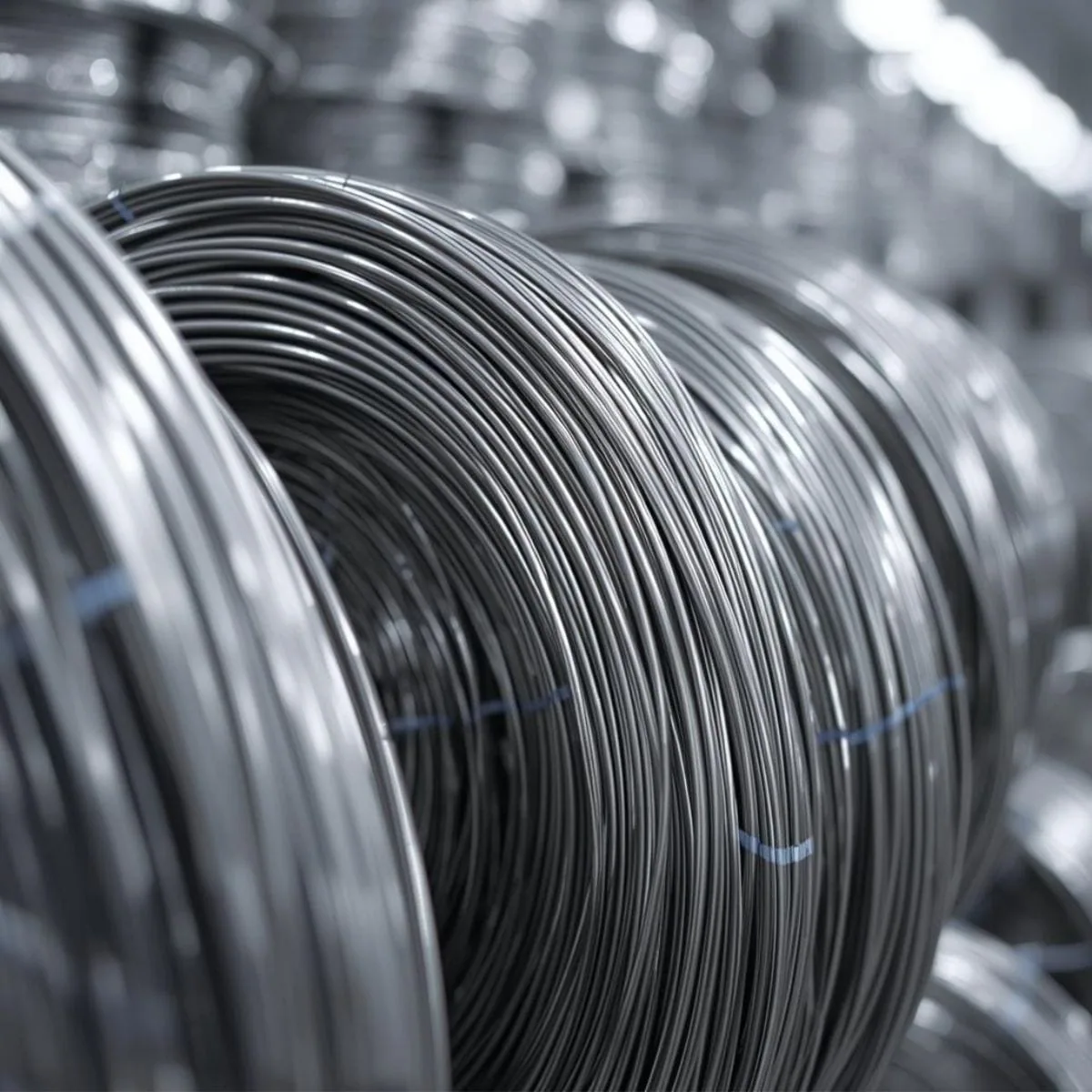
Offered in fine wire (0.03-0.125 inches), coils, straight, welding filler (e.g., 230-W ERNiCrWMo-1 AWS A5.14), and shaped forms for springs, meshes. Diameters up to 0.156 inches suit fabricators; complement with Haynes alloy hex bar for fixtures.
Chemical Composition
| Element | Composition (%) |
|---|---|
| Nickel | Balance (57 min) |
| Chromium | 20-24 |
| Tungsten | 13-15 |
| Molybdenum | 1-3 |
| Iron | ≤3 |
| Manganese | ≤1 |
| Silicon | 0.25-0.75 |
| Carbon | 0.05-0.15 |
| Price | INR 5,000 – 15,000 per kg. Indicative USD 60 – 175 per kg; quoted against grade, form, size and quantity. |
Tungsten enhances high-temp stability; low impurities boost fabricability.
Mechanical and Physical Properties
Solution annealed: UTS 828 MPa min, yield 345 MPa, elongation 40%; excels in creep-rupture to 1093°C. Density 8.97 g/cm³, melting range 1343°C, thermal conductivity ~10.3 W/m·K.
Outstanding thermal stability outperforms many superalloys in cyclic service.
Applications by Industry
Chemical Processing
Catalyst grids, heat exchangers resist carburization/sulfidation; preferred over Inconel for nitriding.
Oil & Gas and Power Generation
Gas turbine combustors, ducts, waste incinerators; high-temp alloys like Haynes capture 25% market in furnaces.
Marine and Pharma
Exhaust components, sterile process vessels endure oxidation better than SS.
OEMs use welding wire for dissimilar joints.
Haynes 230 vs. Common Alternatives
| Property | Haynes 230 | Inconel 625 | Hastelloy C-276 | 310 SS |
|---|---|---|---|---|
| UTS (MPa) | 828 | 827 | 690 | 515 |
| Creep to 900°C | Outstanding | Moderate | Good | Poor |
| Oxidation to 1150°C | Excellent | Good | Superior acids | Fair |
| Thermal Stability | Premier | Good | Excellent | Moderate |
Haynes 230 ideal for extreme heat; C-276 for wet corrosion.
EEAT: Quality Assurance and Compliance
EN 10204-3.1 MTCs, NDT/PMI, ASME Section IX welding quals; export-ready from India with full traceability for global supply chains. High-temp alloy demand rises 6% annually.
Frequently Asked Questions
What standards cover Haynes alloy wire?
Haynes 230 wire: UNS N06230, DIN 2.4733, EN NiCr22W14Mo. Validate strength, oxidation resistance to 1149°C for turbines, chemical gear, aiding OEM compliance. (48 words)
What properties define Haynes 230 wire?
UTS 828 MPa, yield 345 MPa, 40% elongation, density 8.97 g/cm³, melt 1343°C. Superior creep, nitriding/oxidation resistance suit power, chemical processing over alternatives.
What industries rely on Haynes wire?
Chemical (grids), oil & gas/power (combustors), marine/pharma (exhausts). Beats SS in high-heat corrosion; grows with clean energy tech.
Is Haynes alloy wire weldable?
Highly; use 230-W filler (AWS ERNiCrWMo-1) for GTAW/GMAW. Excellent dissimilar welding to Ni/Co alloys; no preheat needed.
Global Export Destinations
We ship worldwide from Mumbai. See every destination we export to on our export markets page.
Domestic Supply Network
We deliver across India from our Mumbai stockyard. See every city we supply on our supply locations page.
Conclusion
Haynes alloy wire (UNS N06230) offers unmatched high-temperature durability, certifications, and testing, empowering confident sourcing for chemical, power, and fabrication needs. What critical application will Haynes wire solve for you?