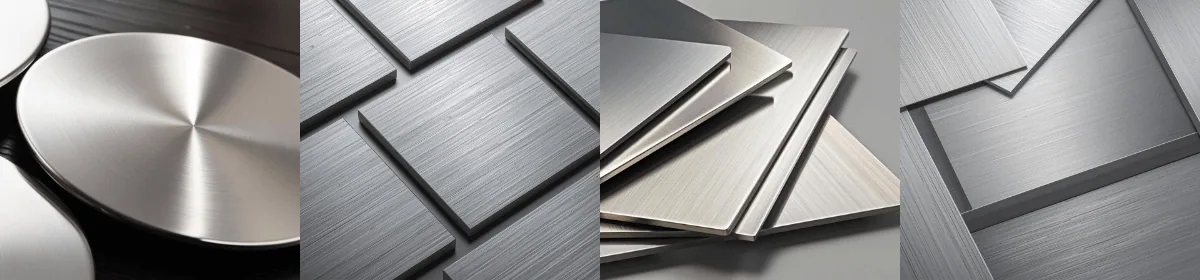
Mu Metal Plates | High-Permeability Shielding Plates for Sensitive Electronics in Harsh Process & Power Environments
Table of Contents:
In a coastal gas-fired power station, operators kept chasing mysterious drifts in turbine vibration readings and UPS alarms every time the main generator stepped load, despite using stainless enclosures and standard EMI gaskets on their control cabinets. Once the plant’s instrumentation team replaced key panel backplates and enclosures with Mu Metal Plates high-permeability nickel iron molybdenum alloys with relative permeabilities easily exceeding 80,000 in correctly annealed grades the stray low-frequency magnetic fields from busbars and transformers were diverted away from the instruments, cutting nuisance trips and unexplained drift events by more than half and stabilising data critical to chemical, oil & gas, marine, pharma, and power operations.
Mu metal (often marketed as HY-Mu 80 or similar trade names) is a soft ferromagnetic alloy typically containing around 80% nickel with the balance mostly iron and a few percent molybdenum, optimised for extremely high magnetic permeability and low coercive force rather than mechanical strength. Compared with stainless steels or carbon steels used as “shielding” plates, properly processed mu metal can exhibit minimum DC permeabilities of around 80,000 at modest flux densities, and maximum permeabilities reported above 100,000–300,000 in specialised grades, making it far more effective at redirecting low-frequency magnetic fields that would otherwise penetrate ordinary housings.
For procurement heads, control and electrical engineers, fabricators, OEMs, and hardware or industrial supply stores, mu metal plates provide a straightforward way to improve instrument reliability in plants crowded with transformers, large motors, variable-speed drives, and high-current bus ducts. Instead of overspecifying electronics or accepting drift and downtime, engineers can place Mu Metal plates between field sources and sensitive devices, using their high permeability to “guide” magnetic flux around the protected volume in chemical, oil & gas, marine, pharma, and power facilities.
Aurico Alloys LLP can support these demands as an affordable, authentic Mu Metal Plates supplier, manufacturer, and stockist in India with exports abroad, providing plate and sheet aligned with widely recognised compositions such as HY-Mu 80 (linked in industry to N14080 types and ASTM A753 Alloy 4 categories) together with cutting and fabrication support.
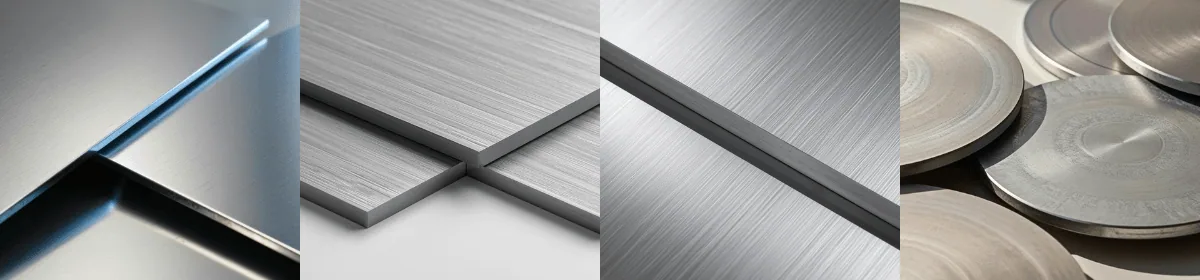
High-quality Mu Metal Plates ready for industrial use.
Specification Overview
| Supplier & Role | Aurico Alloys LLP – Mu Metal plates supplier, stockist, exporter in India to abroad |
|---|---|
| Alloy Family | High-permeability nickel–iron–molybdenum soft magnetic alloys (commonly around 80% Ni) |
| Common Trade Names | Mu Metal, HY-Mu 80, Permimphy, similar 80Ni–Fe–Mo shielding alloys |
| Representative Standards | ASTM A753 Alloy 4 and related specifications used for high-permeability shielding alloys such as HY-Mu 80 types |
| Thickness Range | 4.75 mm – 150 mm |
| Typical Application Focus | Low-frequency and static magnetic shielding (power frequency, DC fields) rather than RF-only EMI control |
| Key Performance Metric | Very high permeability (minimum DC permeability around 80,000 at 40 gauss in common HY-Mu 80 datasheets) |
UNS & Equivalent Grades
| Property | Value |
|---|---|
| UNS number | N14080 |
| Werkstoff / EN number | 2.4545 |
| EN designation | NiFe15Mo |
| Density | 8.74 g/cm3 |
| Melting range | 1454.4 °C |
| Maximum permeability | 200000 |
| Coercivity | 0.008-0.02 Oe |
| Residual induction | 3500 G |
| Curie temperature | 390 °C |
| Mean specific heat | 494 J/kg·K |
| Thermal conductivity | 34.6 W/m·K |
| Electrical resistivity (21 °C) | 58 µΩ·cm |
| Modulus of elasticity (cold drawn) | 232 GPa |
| Modulus of elasticity (hydrogen annealed 1121 °C) | 230 GPa |
| Modulus of elasticity (after process anneal 871 °C) | 217 GPa |
| Mean coefficient of thermal expansion (-75 to 25 °C) | 10.8 µm/m·°C |
| Mean coefficient of thermal expansion (-50 to 25 °C) | 10.7 µm/m·°C |
| Mean coefficient of thermal expansion (-25 to 25 °C) | 10.4 µm/m·°C |
| Mean coefficient of thermal expansion (25 to 50 °C) | 12.30 µm/m·°C |
| Mean coefficient of thermal expansion (25 to 100 °C) | 12.40 µm/m·°C |
| Mean coefficient of thermal expansion (25 to 200 °C) | 12.76 µm/m·°C |
| Mean coefficient of thermal expansion (25 to 300 °C) | 13.00 µm/m·°C |
| Mean coefficient of thermal expansion (25 to 400 °C) | 13.30 µm/m·°C |
Identifiers and physical constants for Mu-metal. A dash means no such designation is published for this grade.
Stock & Product Availability
As a Mu Metal plates stockist, Aurico Alloys LLP can provide plate and sheet thicknesses suitable for transformer shields, control panel backplates, instrument housings, cable trays, and custom enclosures, with typical thickness ranges in the fraction-of-a-millimetre to a few millimetres band depending on shielding design guidance. Plates are usually supplied in stress-annealed condition for forming, followed by final annealing in a controlled hydrogen atmosphere after fabrication to restore maximum permeability as recommended for Mumetal and HY-Mu 80 materials.
Chemical Composition
| Element | Min (%) | Max (%) |
|---|---|---|
| Nickel (Ni) | 80 | 82 |
| Molybdenum (Mo) | 3.5 | 6 |
| Manganese (Mn) | — | 0.8 |
| Silicon (Si) | — | 0.5 |
| Cobalt (Co) | — | 0.5 |
| Copper (Cu) | — | 0.30 |
| Chromium (Cr) | — | 0.30 |
| Phosphorus (P) | — | 0.02 |
| Sulfur (S) | — | 0.01 |
| Carbon (C) | — | 0.05 |
| Iron (Fe) | — | Balance |
Composition limits for Mu-metal. These are specification limits for the grade, not measured values for a lot; the mill test certificate supplied with your order states the actual analysis.
Mechanical & Physical Properties
| Property | Typical Value for Mu Metal / Mumetal Plate |
|---|---|
| Curie Temperature | ≈460 °C |
| Tensile Modulus | ≈230 GPa |
| Electrical Resistivity | ≈5.8 × 10⁻⁷ Ω·m |
| Thermal Expansion Coefficient | ≈10.8–12.4 µstrain/°C |
| Minimum DC Permeability | ≈80,000 at a flux density of 40 gauss for HY-Mu 80 under recommended heat treatment |
| Relative Permeability (optimised) | Values above 100,000 and in some soft Ni–Fe alloys up to around 350,000 reported after suitable annealing |
Applications & Benefits
- Chemical & Oil & Gas: Mu Metal plates used behind control panels, around analyser cabinets, or in transformer and VFD rooms help divert low-frequency magnetic fields away from sensitive transmitters and safety PLCs, improving signal stability and reducing nuisance trips that stainless or mild-steel plates cannot adequately prevent.
- Marine & Power Generation: In ships and power stations, Mu Metal plate shields for navigation electronics, generator controls, and protection relays can mitigate the effects of strong fields from generators and busbars, while Nimonic 75 components handle high-temperature structural duties in the same environment.
- Pharma & High-Clean Facilities: Precision balances, filling machines, and analytical instruments installed near motors or transformers can gain stability from local Mu Metal shielding plates and housings, reducing measurement drift without relocating equipment.
FAQ & Search Trends
Global Export Destinations
We ship worldwide from Mumbai. See every destination we export to on our export markets page.
Domestic Supply Network
We deliver across India from our Mumbai stockyard. See every city we supply on our supply locations page.
Conclusion
Mu Metal plates from Aurico Alloys LLP, produced around proven 80% nickel–iron–molybdenum high-permeability alloy concepts documented in ASTM A753-type and N14080-style data, give chemical, oil & gas, marine, pharma, and power-generation users a targeted magnetic shielding solution that ordinary structural steels cannot match are your most critical instruments, control rooms, and sensors still exposed to stray magnetic fields because their “shields” are just ordinary plates rather than purpose-designed Mu Metal shielding alloys?