Kovar Plates | Controlled-Expansion Plates for Hermetic, Sensor & Precision Service in Harsh Process Industries
Table of Contents:
A refinery upgrading to smart pressure transmitters in its hydrotreater unit found that stainless‑steel header plates were cracking glass‑to‑metal seals during thermal cycling between ambient and 350°C, leading to sensor drift, leaks, and unplanned instrument replacements every few months. After switching critical header and feed‑through components to Kovar Plates an iron‑nickel‑cobalt controlled‑expansion alloy with a coefficient of thermal expansion (CTE) closely matching borosilicate glass seal failure rates dropped by more than 70% and calibration stability extended beyond three years, even in hydrogen and sour‑service environments shared by chemical, oil & gas, marine, pharma, and power plants.
Procurement heads, design engineers, fabricators, OEMs, and hardware or industrial supply stores serving these sectors increasingly see that Kovar (Alloy 29‑17, UNS K94610, also known as ASTM F15, Nilo K or Pernifer 29‑18) solves a very specific reliability problem that stainless or carbon steel cannot: matching the thermal expansion of glass, ceramics, and some alumina components so that hermetic seals and precision assemblies survive repeated thermal and pressure cycles without cracking or losing tightness.
Aurico Alloys LLP supports this demand as a trusted Kovar Plates supplier, stockist, and exporter in India to abroad, providing affordable, authentic plate stock with controlled chemistry around 29% Ni, 17% Co and balance Fe per ASTM F15 / UNS K94610 for glass‑to‑metal seals, transmitter headers, feed‑through plates, and precision housings. Hardware and industrial supply stores can carry Kovar plates and blanks for OEMs and MRO teams who previously had to import small lots, tightening lead‑times and traceability for safety‑critical instrumentation and sensor packages.
Nimonic 75 (UNS N06075) thin‑gauge sheet and shim stock can be paired with Kovar plates in the same sensor, furnace, or turbine system: Kovar aligns CTE with glass or ceramics, while Nimonic manages high‑temperature strength and oxidation resistance.
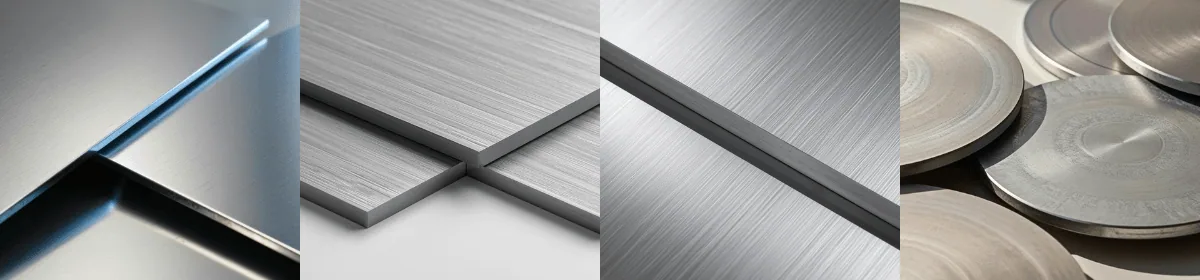
High-quality Kovar Plates ready for industrial use.
Specification Overview
| Supplier & Role | Aurico Alloys LLP – Kovar plates supplier, stockist, exporter in India to abroad |
|---|---|
| Alloy Name | Kovar, also known as Alloy 29‑17, Alloy K, Nilo K, Pernifer 2918 |
| UNS & Werkstoff | UNS K94610, Werkstoff 1.3981 |
| Typical Standards | AMS 7728 for sheet, strip and plate; ASTM F15 as the alloy specification, whose own scope covers wire, rod, bar, strip, sheet and tubing |
| Thickness Range | 4.75 mm – 150 mm |
| Density | ≈8.3–8.6 g/cm³ depending on exact chemistry |
| Key Design Feature | Mean CTE ≈ 5–6 × 10⁻⁶ /°C between about 20–400°C, closely matching borosilicate glass and some ceramics |
UNS & Equivalent Grades
| Property | Value |
|---|---|
| UNS number | K94610 |
| Coefficient of expansion (30-400 °C) | 4.60-5.20 µm/m·°C (Acceptance limit per ASTM F15 Section 11.1 - not a typical value) |
| Coefficient of expansion (30-450 °C) | 5.10-5.50 µm/m·°C (Acceptance limit per ASTM F15 Section 11.1 - not a typical value) |
| Plate, sheet and strip specification | AMS 7728 |
Identifiers and physical constants for Kovar. A dash means no such designation is published for this grade.
Stock & Product Availability
As a Kovar plates stockist, Aurico Alloys LLP can provide plate and sheet thicknesses commonly used for instrument headers, relay and sensor bases, glass‑to‑metal feed‑through plates, and small housings, often from fractions of a millimetre up to several millimetres, with width and length tailored by cut‑to‑size service to minimise machining for OEM and MRO customers.
Chemical Composition
| Element | Min (%) | Max (%) |
|---|---|---|
| Iron (Fe) | 53 nominal - adjusted to meet the Table 4 expansion limits | |
| Nickel (Ni) | 29 nominal - adjusted to meet the Table 4 expansion limits | |
| Cobalt (Co) | 17 nominal - adjusted to meet the Table 4 expansion limits | |
| Manganese (Mn) | — | 0.50 |
| Silicon (Si) | — | 0.20 |
| Carbon (C) | — | 0.04 |
| Aluminium (Al) | — | 0.10 (Al + Mg + Zr + Ti total 0.20 max) |
| Magnesium (Mg) | — | 0.10 (Al + Mg + Zr + Ti total 0.20 max) |
| Zirconium (Zr) | — | 0.10 (Al + Mg + Zr + Ti total 0.20 max) |
| Titanium (Ti) | — | 0.10 (Al + Mg + Zr + Ti total 0.20 max) |
| Copper (Cu) | — | 0.20 |
| Chromium (Cr) | — | 0.20 |
| Molybdenum (Mo) | — | 0.20 |
Composition for Kovar. Figures given as a range or a maximum are limits and those marked nominal are not; none of them are measured values for a lot; the mill test certificate supplied with your order states the actual analysis.
Mechanical & Physical Properties
| Property (Room Temperature) | Typical Value for Kovar Plate/Sheet |
|---|---|
| Density | ≈8.3–8.6 g/cm³ |
| Ultimate Tensile Strength | ≈500–520 MPa, with some producers quoting ≈517 MPa and others ≈75 ksi nominal |
| Yield Strength (0.2% offset) | ≈340 MPa nominal (≈49 ksi) |
| Elongation | ≥25–30 % depending on product form and temper |
| Hardness | Typically ≥80 HRB in strip; plate hardness varies with temper |
| Melting Range | ≈1450°C (≈2640°F) |
| Mean CTE (20–100°C) | ≈5–6 × 10⁻⁶ /°C, similar to borosilicate glass |
| CTE (20–450°C) | ≈5.3 × 10⁻⁶ /°C (producer‑reported mean value) |
| Service Temperature Range | From cryogenic temperatures to at least 400°C in many sealed components without loss of integrity |
Applications & Benefits
- Chemical & Oil & Gas: Kovar plates in transmitter headers, thermowell feed‑throughs, and analytical sensor housings keep glass‑to‑metal seals tight during rapid heat‑up and cool‑down in hydrotreater, hydrocracker, and acid‑gas units, reducing instrument leakage and recalibration frequency versus stainless or carbon‑steel plates.
- Marine & Power Generation: Glass‑sealed connectors, vacuum feed‑through plates, and sensor packages built on Kovar plate maintain hermeticity during shipboard and turbine thermal cycling.
- Pharma & High‑Clean Systems: In sterilisation monitoring, clean‑room sensors, and analytical equipment, Kovar plates and rings create reliable glass‑sealed windows and feed‑throughs that tolerate autoclave cycles and temperature shocks better than mismatched expansion alloys.
FAQ & Search Trends
Global Export Destinations
We ship worldwide from Mumbai. See every destination we export to on our export markets page.
Domestic Supply Network
We deliver across India from our Mumbai stockyard. See every city we supply on our supply locations page.
Conclusion
Kovar plates from Aurico Alloys LLP, produced to UNS K94610 and ASTM F15 with tightly controlled iron‑nickel‑cobalt chemistry and documented thermal expansion behaviour, give chemical, oil & gas, marine, pharma, and power users a controlled‑expansion solution that conventional steels cannot match for hermetic seals and precision assemblies are your most critical glass‑sealed sensors, feed‑throughs, and headers still relying on alloys whose expansion was never designed to follow the glass?