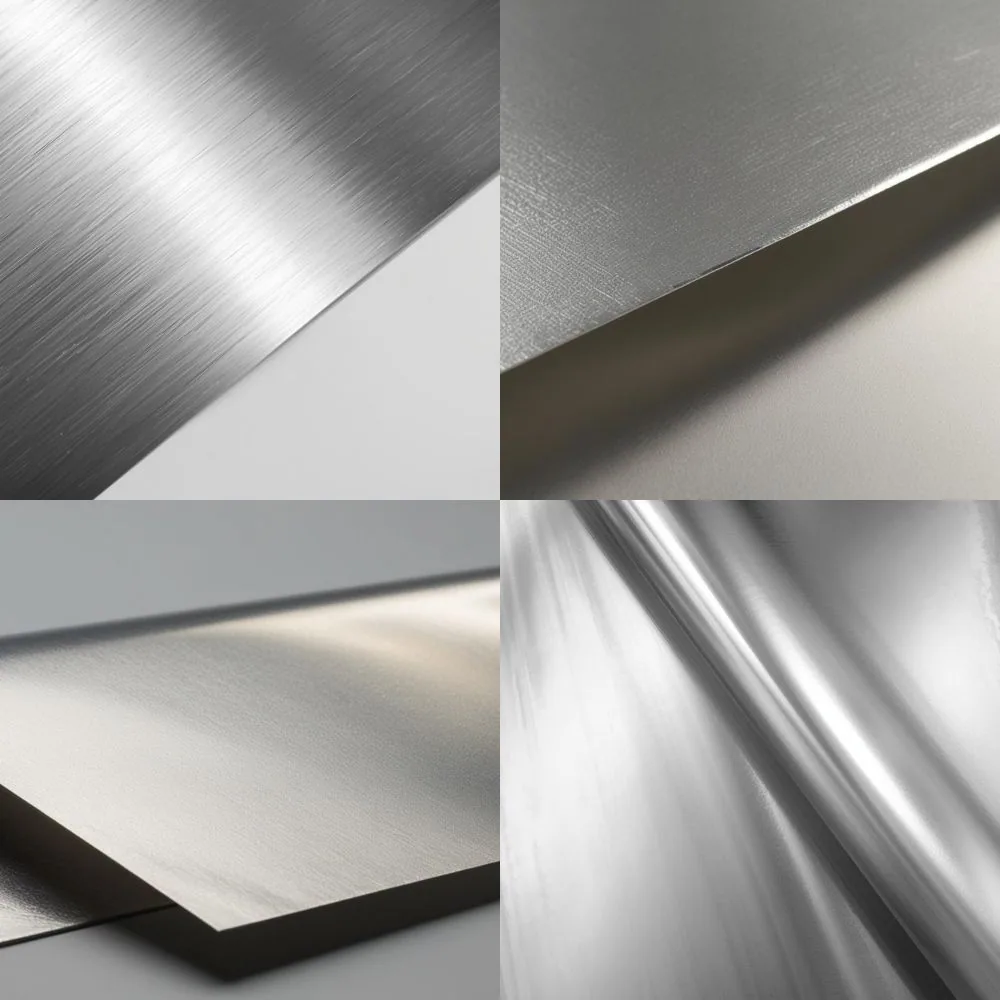
Hastelloy X and C2000 Foil: Engineered for Extreme Temperature and Corrosion Demands
Table of Contents:
- What is Hastelloy X And C2000 Foil?
- Specifications and Standards Overview
- Equivalent Grades and International Designations
- Product Forms, Sizes, and Availability
- Chemical Composition Profiles
- Mechanical and Physical Properties
- Industry-Specific Applications and Advantages
- Performance Comparison vs. Common Grades
- FAQ: Key Insights on Hastelloy X and C2000 Foil
- Strategic Pairing: Titanium Grade 5 for Complementary Service
- Global Export Countries
- Key Supply Destinations
- Conclusion: Precision Solutions for Heat and Corrosion Extremes
During a scheduled outage at a Middle East gas turbine combined-cycle plant, inspectors discovered Hastelloy X (UNS N06002) foil combustion liners intact after 40,000 hours at 1100 °C, while adjacent Inconel 625 sections showed oxidation creep and cracking averting a multi-week forced shutdown and $2M+ in lost generation. Meanwhile, in an adjacent sulfuric acid plant, Hastelloy C2000 foil (UNS N06200) gaskets held against oxidizing-reducing cycles that failed Alloy C-276 equivalents, stabilizing pH control and boosting uptime. These cases highlight why OEMs, fabricators, and procurement teams turn to Hastelloy X and C2000 foils for applications where standard nickel alloys compromise on heat or corrosion extremes.
Specifications and Standards Overview
Hastelloy X (UNS N06002, DIN 2.4665) is specified under ASTM B435/ASME SB435 for sheet, plate, and strip (including foil). Hastelloy C2000 (UNS N06200, Werkstoff 2.4675) follows ASTM B575/ASME SB575, European designation W.Nr. 2.4675 / NiCr23Mo16Cu, optimized for sheet and foil in corrosive media. Both alloys ship with EN 10204 3.1 certificates, including PMI, tensile data, and grain size verification, compliant with NACE MR0175 for sour service and ASME VIII for pressure boundaries.
Equivalent Grades and International Designations
| Alloy | UNS | Werkstoff / DIN | Key ASTM / EN Standards |
|---|---|---|---|
| Hastelloy X | N06002 | 2.4665 / NiCr22FeMoNb | ASTM B435 (sheet/plate/foil) |
| Hastelloy C2000 | N06200 | 2.4675 / NiCr23Mo16Cu | ASTM B575 (sheet/plate/foil) |
These designations ensure seamless integration into global projects, from ASME-stamped turbine components to PED-certified chemical vessels.
Product Forms, Sizes, and Availability
Foil in both alloys ranges from 0.025–0.5 mm thick, supplied in coils or cut sheets for liners, gaskets, and expansion joints; Hastelloy X foil excels in thin, high-ductility forms for combustion baffles. C2000 foil offers precision slitting for corrosive seals, with annealed tempers for formability and optional tension leveling. Export packs include MTCs, RoHS/REACH declarations, and optional NDT (dye penetrant, helium leak) for pharma and aerospace qualification.
| Hastelloy X (Density: 8.22 g/cm³) | |
|---|---|
| Melting Point | 1355 °C |
| Hastelloy C2000 (Density: ~8.5 g/cm³) | |
| Thermal Expansion | 12.8 µm/m·K (20–100 °C) |
Chemical Composition Profiles
| Element | Hastelloy X (N06002) | Hastelloy C2000 (N06200) |
|---|---|---|
| Nickel (Ni) | Balance | Balance |
| Chromium (Cr) | 20.5–23.0 | 22.0–24.0 |
| Molybdenum (Mo) | 8.0–10.0 | 15.0–17.0 |
| Iron (Fe) | 17.0–20.0 | 3.0–6.0 |
| Cobalt (Co) | 0.5–2.5 | ≤2.5 |
| Tungsten (W) | 0.2–1.0 | ≤3.0 |
| Copper (Cu) | ≤0.03 | 1.3–1.9 |
| Carbon (C) | ≤0.10–0.15 | ≤0.01 |
X's Fe-Cr balance enables solid-solution strengthening for heat; C2000's Cu-Mo-Cr optimizes pitting resistance (PREN ~55) in mixed acids.
Mechanical and Physical Properties
| Property | Hastelloy X (Annealed) | Hastelloy C2000 (Annealed) |
|---|---|---|
| Tensile Strength | 655 MPa min | 690 MPa min |
| Yield Strength (0.2%) | 240 MPa min | 310 MPa min |
| Elongation | 35% min | 40% min |
| Max Continuous Temp | 1204 °C | 540 °C |
Hastelloy X retains 50% strength at 980 °C; C2000 offers weld stability without PWHT, per ASME IX.
Industry-Specific Applications and Advantages
Why this grade
Hastelloy X is a high-temperature alloy rather than a wet-corrosion one. It holds oxidation resistance to around 1200°C and is equally at home in reducing, carburising and oxidising furnace atmospheres, which is why it has long been the choice for gas turbine combustors, transition ducts and industrial furnace hardware.
Power Generation & Gas Turbines
Hastelloy X foil forms combustion liners and transition ducts, resisting oxidation up to 1200 °C where Inconel 718 creeps prematurely extending intervals 30–50%.
Chemical Processing
C2000 foil seals reactors handling H2SO4-HCl mixes, outperforming C-276 in oxidizing shifts; X foil shields crackers from carburization.
Oil & Gas
C2000 in sour wet gas (NACE compliant); X in flare stacks and HT ducts, reducing failures vs. RA333.
Marine & Pharma
C2000 foil for seawater evaporators and sterile vessels (FDA); X for exhaust heat exchangers.
Performance Comparison vs. Common Grades
| Metric | Hastelloy X | Hastelloy C2000 | Inconel 718 | Hastelloy C-276 |
|---|---|---|---|---|
| Max Temp (°C) | 1204 | 540 | 700 | 1093 |
| Pitting in Mixed Acids | Good | Excellent (Cu boost) | Fair | Superior reducing |
| Oxidation @1000°C | Excellent | Good | Superior | Fair |
| Weld Stability | Excellent | Excellent | Requires PWHT | Good |
X dominates heat; C2000 balances corrosives better than C-276 in oxidizing-reducing mixes.
FAQ: Key Insights on Hastelloy X and C2000 Foil
Strategic Pairing: Titanium Grade 5 for Complementary Service
In oxidizing seawater or nitric systems, integrate Titanium Grade 5 UNS R56400 ASTM B265 sheet alongside Hastelloy X/C2000 foil to optimize cost and weight while covering full corrosive spectra.
Global Export Destinations
We ship worldwide from Mumbai. See every destination we export to on our export markets page.
Domestic Supply Network
We deliver across India from our Mumbai stockyard. See every city we supply on our supply locations page.
Conclusion: Precision Solutions for Heat and Corrosion Extremes
Hastelloy X foil (UNS N06002, ASTM B435) and C2000 foil (UNS N06200, ASTM B575) address distinct yet overlapping challenges X with unmatched oxidation at 1200 °C for power and aerospace, C2000 with versatile acid resistance for chemical and sour gas both validated by rigorous MTCs and NACE/ASME compliance. Superior to Inconel 718 in simplicity or C-276 in oxidizing media, they enable thinner, longer-life designs that cut downtime and capex. Ready to match Hastelloy X and C2000 foil to your most demanding thermal-corrosive profile?