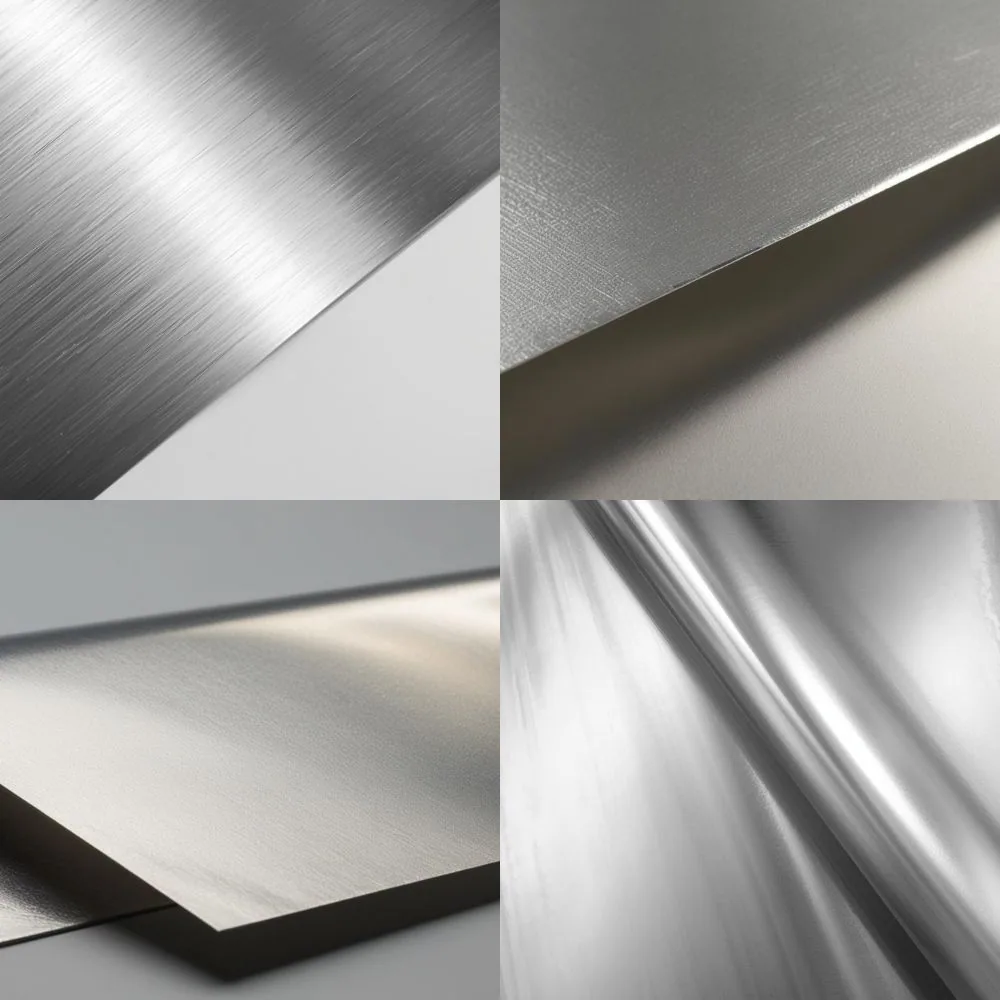
Hastelloy C22 Foil: The Benchmark for Corrosion Resistance in Harsh Industrial Environments
Table of Contents:
- What is Hastelloy C22 Foil?
- Specifications and Standards for Hastelloy C22 Foil
- Chemical Composition of Hastelloy C22
- Mechanical and Physical Properties
- Industry Applications: Why Hastelloy C22 Foil Excels
- FAQ: Hastelloy C22 Foil Technical Insights
- Complementary Materials: Titanium Grade 5 for Oxidizing Service
- Global Export Countries
- Key Supply Destinations
- Conclusion: Confidence in Critical Corrosion Barriers
In a Gulf Coast chlor-alkali plant, repeated pitting failures in Alloy 904L heat-exchanger baffles led to unplanned downtime costing over $500,000 per incident and risking environmental compliance violations. Switching to Hastelloy C22 foil (UNS N06022) eliminated localized corrosion in the mixed chloride and hypochlorite streams, extending service life by more than three years and stabilizing operations. This real-world shift underscores why procurement heads, engineers, and fabricators in chemical processing, oil & gas, marine, pharma, and power generation increasingly specify Hastelloy C22 over traditional stainless or duplex alternatives.
Specifications and Standards for Hastelloy C22 Foil
Hastelloy C22, designated UNS N06022 and DIN/Werkstoff No. 2.4602, is a nickel-chromium-molybdenum-tungsten alloy engineered for broad-spectrum corrosion resistance. Primary specifications include ASTM B575 (sheet, plate, and strip, including foil) and ASME SB575. The European designation is W.Nr. 2.4602 / NiCr21Mo14W. Foil forms are typically supplied annealed for optimal formability, with thicknesses from ultra-thin gauges for liners to heavier strips for structural shims, all backed by EN 10204 3.1 mill test certificates ensuring PMI, tensile testing, and full traceability.
Equivalent Grades and Designations
| Standard | Designation | Description |
|---|---|---|
| UNS | N06022 | Universal nickel alloy identifier. |
| Werkstoff Nr. | 2.4602 | European material number. |
| EN | NiCr21Mo14W | Nickel alloy chemical designation. |
| JIS | NW 6022 | Japanese industrial standard. |
| ASTM | B575 / SB575 | Sheet, plate, strip (foil). |
These cross-references facilitate global procurement, ensuring Hastelloy C22 foil meets ASME Section VIII, PED, and NACE MR0175/ISO 15156 sour-service requirements without substitution risks.
Product Forms and Availability
Hastelloy C22 foil is available in coils, cut lengths, and custom blanks, with standard thicknesses from 0.025 mm for gaskets to 0.5 mm for baffles and shims. OEMs and fabricators benefit from slitting, edging, and tension-leveling to precise tolerances, often with surface finishes optimized for welding or brazing. Stock programs emphasize export-ready packaging with full MTCs, RoHS/REACH compliance, and NDT options like dye penetrant for critical pharma and nuclear applications.
| Density | 8.69 g/cm³ |
|---|---|
| Melting Range | 1399 °C (2550 °F) |
| Thermal Conductivity | 10.1 W/m·K at 21 °C |
| Price | INR 4,500 – 6,500 per kg. Indicative USD 53 – 76 per kg; quoted against grade, form, size and quantity. |
Chemical Composition of Hastelloy C22
| Element | Min (%) | Max (%) |
|---|---|---|
| Nickel (Ni) | Balance | – |
| Chromium (Cr) | 20.0 | 22.5 |
| Molybdenum (Mo) | 12.5 | 14.5 |
| Tungsten (W) | 2.5 | 3.5 |
| Iron (Fe) | 2.0 | 6.0 |
| Cobalt (Co) | – | 2.5 |
| Manganese (Mn) | – | 0.50 |
| Silicon (Si) | – | 0.08 |
| Carbon (C) | – | 0.010 |
| Phosphorus (P) | – | 0.02 |
| Sulfur (S) | – | 0.02 |
| Vanadium (V) | – | 0.35 |
The high Cr-Mo-W content provides pitting resistance equivalent number (PREN) values exceeding 50, surpassing many duplex stainless steels while maintaining weldability without post-weld heat treatment.
Mechanical and Physical Properties
| Property | Value (Annealed Condition) |
|---|---|
| Tensile Strength | ≥690 MPa (100 ksi) |
| Yield Strength (0.2% offset) | ≥310 MPa (45 ksi) |
| Elongation | ≥45% |
| Hardness (HRB) | ≤95 |
| Modulus of Elasticity | 206 GPa |
These properties support thin-section designs in pressure vessels and heat exchangers per ASME VIII Div. 1, with excellent toughness down to cryogenic temperatures and creep resistance up to 540 °C.
Industry Applications: Why Hastelloy C22 Foil Excels
Why this grade
Hastelloy C22 raises chromium to about 22% at the expense of tungsten. The extra chromium widens the margin in oxidising conditions — nitric acid, mixed acids, and oxidising chlorides such as ferric and cupric chloride — which is exactly where C276 is most likely to pit. It is the standard step up from C276 when the oxidising side of a mixed stream is the problem.
Chemical Processing
In flue gas desulfurization (FGD) scrubbers and chlorination systems, Hastelloy C22 foil resists wet chlorine, hypochlorite, and sulfuric acid at concentrations where 316L and 904L pit rapidly reducing maintenance by up to 70% in aggressive service.
Oil & Gas
Sour gas handling and deepwell sour service (NACE MR0175 compliant) favor UNS N06022 foil for its resistance to H2S, chlorides, and CO2, outperforming C-276 in oxidizing conditions.
Marine
Seawater heat exchangers and desalination plants use C22 foil for superior crevice corrosion resistance over duplex grades, especially in high-velocity, aerated flows.
Pharma
High-purity reactors and sterile processing lines specify Hastelloy C22 (FDA-compliant) to prevent contamination from corrosion products, with foil forms ideal for flexible liners and gaskets.
Power Generation
FGD systems and waste incinerators deploy C22 foil in ducts and dampers, where mixed acids and particulates accelerate failure in standard alloys studies show 3–5x longer life.
Hastelloy C22 vs. Common Alternatives: A Data-Driven Comparison
| Property / Resistance | Hastelloy C22 (UNS N06022) | Hastelloy C-276 | Alloy 59 | 904L |
|---|---|---|---|---|
| PREN (Pitting Resistance) | >50 | ~45 | >50 | ~35 |
| Oxidizing Acids (HNO3, FeCl3) | Excellent | Good | Superior | Fair |
| Reducing Acids (HCl, H2SO4) | Excellent | Superior | Excellent | Poor |
| Weldability (No PWHT) | Excellent | Good | Good | Fair |
| Cost Relative to 316L | 4–6x | 5–7x | 6–8x | 2–3x |
Hastelloy C22 strikes an optimal balance for mixed media, offering better oxidizing resistance than C-276 at similar cost, while vastly outpacing 904L in pitting scenarios common to FGD and chlorination.
FAQ: Hastelloy C22 Foil Technical Insights
Global Export Destinations
We ship worldwide from Mumbai. See every destination we export to on our export markets page.
Domestic Supply Network
We deliver across India from our Mumbai stockyard. See every city we supply on our supply locations page.
Complementary Materials: Titanium Grade 5 for Oxidizing Service
Where reducing acids dominate, pair Hastelloy C22 with Titanium Grade 5 UNS R56400 ASTM B265 plate or sheet for cost-effective oxidizing media handling, such as nitric acid systems or aerated seawater leveraging Ti's lightweight strength alongside C22's versatility.
Conclusion: Confidence in Critical Corrosion Barriers
Hastelloy C22 foil (UNS N06022, ASTM B575, DIN 2.4602) delivers unmatched versatility across pitting, crevice, stress corrosion, and mixed-acid environments, validated by decades of service in FGD, chlor-alkali, pharma reactors, and offshore sour systems—empowering engineers and procurement teams to design for longevity rather than frequent replacement. With rigorous MTC documentation, NACE compliance, and proven superiority over C-276, Alloy 59, and 904L in balanced corrosives, Hastelloy C22 sets the reliability standard for demanding applications. Is Hastelloy C22 the missing link in your next corrosion-critical project?