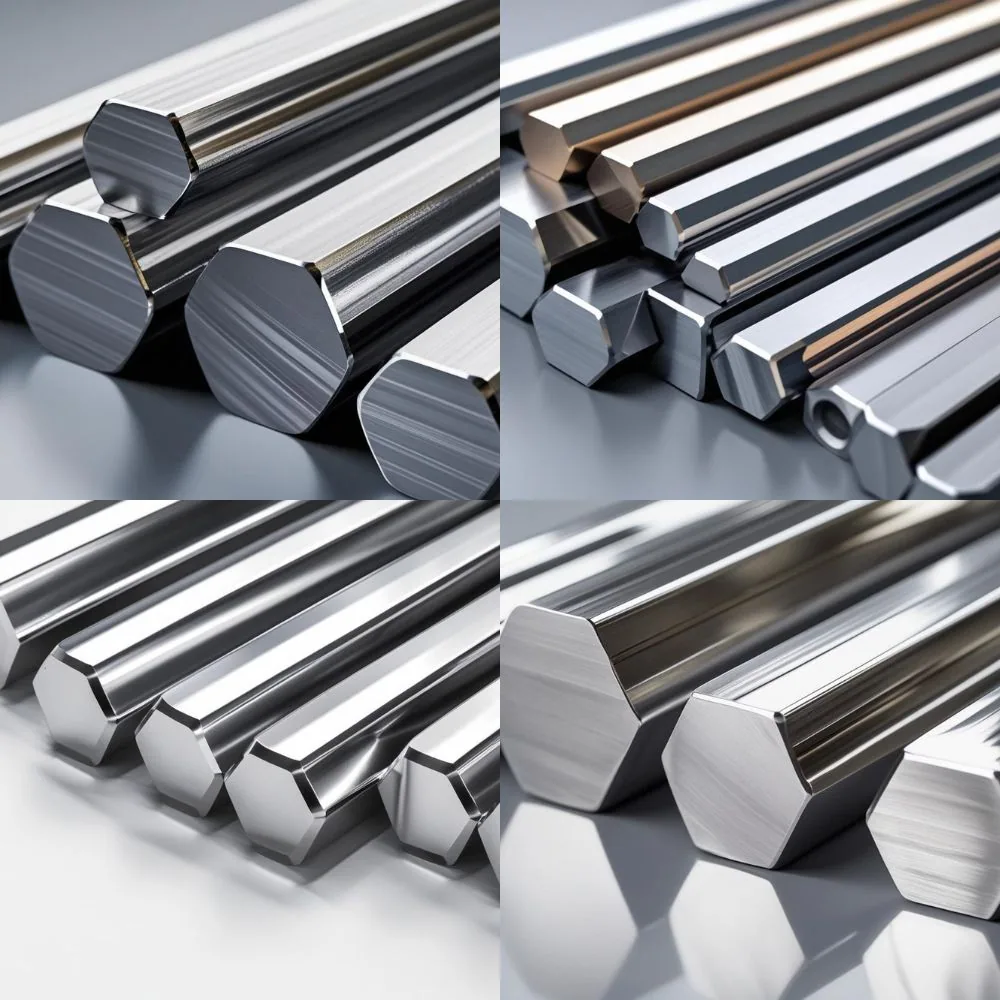
Titanium & Titanium Alloy Hex Bars: Engineering Excellence for Demanding Industries
Table of Contents:
In a chemical processing plant off the Gulf Coast, a standard stainless steel hex bar failed catastrophically after just 18 months, succumbing to pitting corrosion from chloride-laden acids, leading to a costly shutdown and equipment replacement exceeding $500,000. This real-world incident underscores the critical need for superior materials like nickel alloy hex bars, which deliver unmatched corrosion resistance and mechanical integrity under extreme conditions.
In a high-stakes chemical processing plant off India's west coast, a stainless steel hex bar failed catastrophically under corrosive chloride exposure, leading to a multimillion-rupee shutdown and safety risks. This incident underscores the critical need for superior materials like titanium hex bars, prized for unmatched corrosion resistance and strength in harsh environments.
Specifications and Standards
Titanium hex bars conform to ASTM B348 for bars and billets, covering grades from commercially pure titanium (CP Ti) to advanced alloys. Key designations include UNS R50400 (Grade 2) and UNS R56400 (Grade 5 Ti-6Al-4V), alongside DIN 3.7035 and EN equivalents ensuring global compliance. These standards mandate rigorous testing for tensile strength, ductility, and microstructure integrity, vital for procurement heads in regulated sectors.
Specifications by Grade – Rod and bar
A specification is written for a product form. The standards below are the ones that cover rod and bar; the plate, bar and tube specifications for these grades are different documents and are listed on their own pages.
| Grade | UNS | Rod and bar specification |
|---|---|---|
| Grade 1 | R50250 | ASTM B348 |
| Grade 2 | R50400 | ASTM B348 |
| Grade 5 | R56400 | ASTM B348 |
| Grade 7 | R52400 | ASTM B348 |
| Grade 9 | R56320 | ASTM B348 |
| Grade 11 | R52250 | ASTM B348 |
| Grade 12 | R53400 | ASTM B348 |
| Grade 23 | R56407 | ASTM B348 |
| Ti-6-2-4-2 | R54620 | AMS 4975 / MIL-T-9047G |
| Ti-6-6-2 | R56620 | AMS 4971 / AMS 4978 |
| Ti-5-2-4-4 | R58650 | Mill specification |
| Ti-8-1-1 | R54810 | AMS 4972 |
| Ti-6Al-7Nb | R56700 | ASTM F1295 / ISO 5832-11 |
Equivalent Grades
| UNS | ASTM Grade | DIN/EN | Description |
|---|---|---|---|
| R50400 | Grade 2 | 3.7035 / Ti2 | CP Titanium, high ductility |
| R56400 | Grade 5 | 3.7165 | Ti-6Al-4V, high strength |
| R56260 | Grade 23 | 3.7165 | ELI variant for medical/pharma |
Product Forms and Availability
Hex bars are available in diameters from 3.17 mm to 350 mm, with custom lengths up to 12 meters, precision-ground or hot-rolled finishes. Common forms include hex, round, flat, and square, stocked for immediate export from Mumbai to global OEMs and fabricators. Sizes cater to bolts, fasteners, and structural components in marine and power applications.
Chemical Composition
For Grade 5 (Ti-6Al-4V; UNS R56400), composition includes Ti (balance), Al 5.5-6.75%, V 3.5-4.5%, Fe max 0.40%, O max 0.20%, with strict limits on C, N, H. Grade 2 (UNS R50400) is CP Ti with N max 0.03%, Fe max 0.30%, O max 0.25%. These profiles ensure biocompatibility and corrosion resistance per ASTM B348.
Mechanical and Physical Properties
| Property | Grade 2 (min) | Grade 5 (min, annealed bar <2") |
|---|---|---|
| Tensile Strength (ksi/MPa) | 50/345 | 135/931 |
| Yield Strength (ksi/MPa) | 40/275 | 125/862 |
| Elongation (%) | 20 | 10 |
| Density (g/cm³) | 4.51 | 4.43 |
These properties deliver a superior strength-to-weight ratio, with density ~60% of steel, ideal for weight-sensitive power generation components.
Applications by Industry
In chemical processing, titanium hex bars resist acids and chlorides better than stainless steels, reducing replacement frequency by up to 5x in aggressive environments. Oil & gas sectors use them for downhole tools and subsea fasteners due to H2S/CO2 tolerance.
Marine applications leverage biofouling resistance and saltwater corrosion immunity, extending propeller shaft life. Pharma favors Grade 23 ELI for sterile equipment compliance, while power generation employs them in heat exchangers for thermal efficiency.
OEM manufacturers and fabricators select hex bars for precision machining into valves and fittings; industrial supply stores stock them for quick B2B fulfillment.
Titanium Hex Bars vs. Alternatives
| Aspect | Titanium Gr5 | 316 SS | Inconel 625 |
|---|---|---|---|
| Density (g/cm³) | 4.43 | 8.0 | 8.44 |
| Corrosion Resistance (Seawater) | Excellent | Good | Superior high-temp |
| Cost (Relative) | High | Low | Higher |
| Strength-to-Weight | Best | Fair | Good |
Titanium excels in weight reduction and corrosion over 316 SS for marine use, while offering better cost-effectiveness than Inconel in non-extreme heat.
Industry Statistics
The global titanium market is projected to reach $35.52 billion by 2029, driven by chemical processing (15% share) and power generation growth. Marine and oil & gas sectors consume ~20% of mill products, with hex bars key for structural integrity.
Certifications, Testing, and Compliance
Supplied with mill test certificates (EN 10204 3.1/3.2), ultrasonic testing (UT), and positive material identification (PMI) per ASTM E1009. Compliant with ISO 9001, PED 2014/68/EU for pressure equipment, and export-ready documentation for seamless customs clearance from Mumbai. Non-destructive testing like eddy current ensures zero defects for critical OEM applications.
Frequently Asked Questions
What standards govern titanium hex bars?
ASTM B348 covers titanium and alloy bars (UNS R50400 Grade 2, R56400 Grade 5), with equivalents in DIN 3.7035/3.7165 and EN specs. These ensure chemical, mechanical compliance for chemical, marine use. Testing includes tensile per strain rate specs. (52 words)
What are common sizes for titanium alloy hex bars?
Hexagon sizes range 3.17 mm to 350 mm across flats, lengths 1-12 m, in hot-rolled or precision-ground finishes. Availability suits OEM fasteners, pharma fittings. Custom machining per drawing for fabricators.
Why choose titanium over stainless steel for oil & gas?
Titanium offers superior resistance to sour gas (H2S), pitting in chlorides, and 60% weight savings vs 316 SS. Ideal for subsea hex bar components, extending service life in offshore platforms.
Are titanium hex bars suitable for pharma applications?
Yes, Grade 23 ELI (UNS R56407) meets ASTM F136 for biocompatibility, resisting sterilization cycles and pure water corrosion. Used in hex bar fittings for cleanrooms, outperforming alloys in purity.
Global Export Destinations
We ship worldwide from Mumbai. See every destination we export to on our export markets page.
Domestic Supply Network
We deliver across India from our Mumbai stockyard. See every city we supply on our supply locations page.
Conclusion
Titanium and titanium alloy hex bars deliver proven reliability, backed by stringent ASTM/UNS standards and comprehensive testing, empowering procurement heads, OEMs, and fabricators with confidence in corrosive, high-stress operations. For related options like nickel alloy hex bars, explore complementary solutions. Ready to optimize your supply chain?