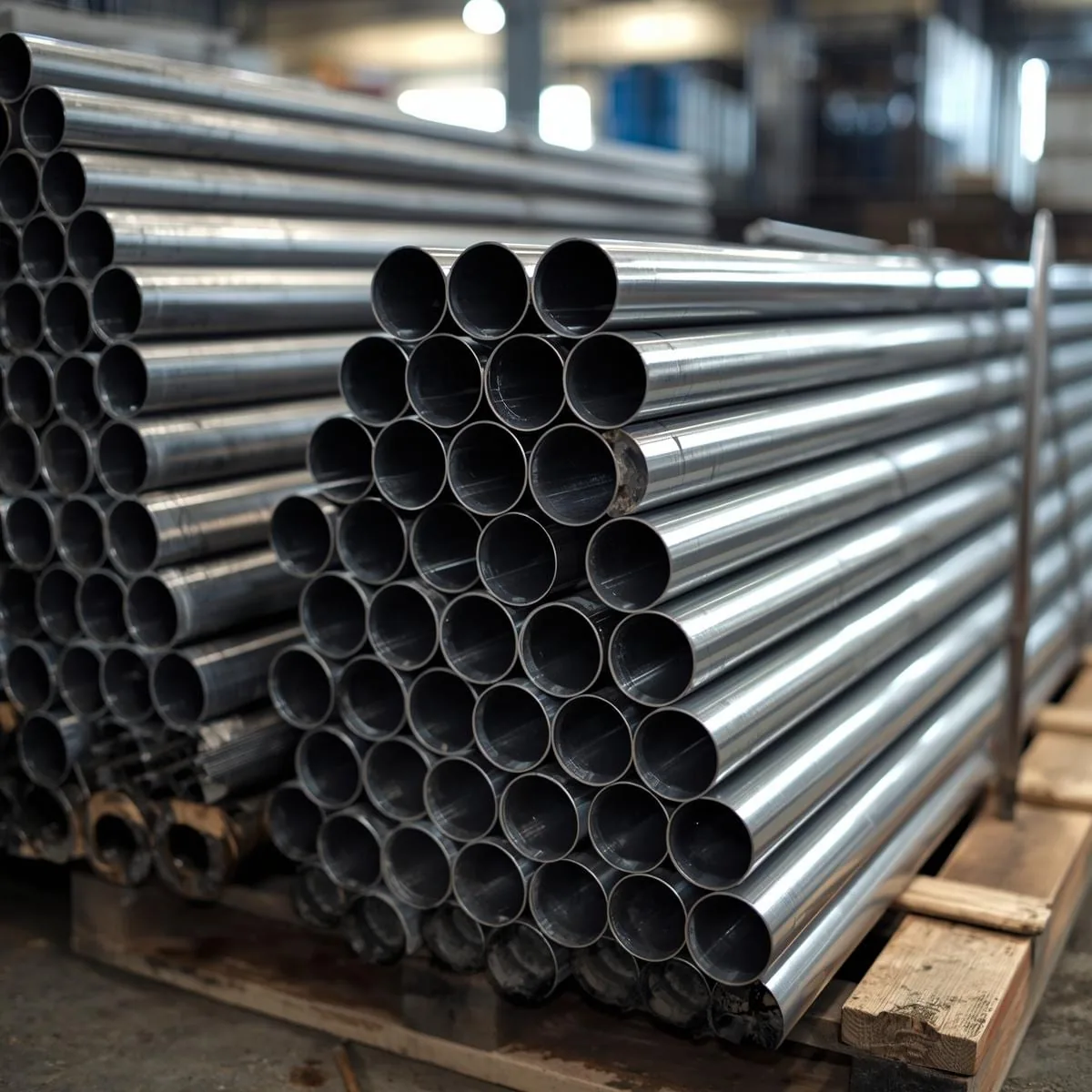
Monel® Pipes: The Nickel-Copper Solution for Extreme Corrosion Challenges
Table of Contents:
In a North Sea offshore platform, standard stainless steel piping failed catastrophically after just two years, succumbing to seawater-induced stress corrosion cracking amid fluctuating temperatures and high chloride exposure. This incident, costing millions in downtime and repairs, highlighted the limitations of conventional alloys in harsh marine environments. Monel® pipes, with their nickel-copper composition, emerged as the reliable alternative, preventing such failures and ensuring operational continuity.
Specifications and Standards
Monel® pipes adhere to rigorous international standards, ensuring reliability across global supply chains. Key specifications include ASTM B165 for seamless pipes (UNS N04400), ASTM B725 for welded pipes, ASME SB163/SB165 for boiler and pressure vessel applications, and DIN 17751. These standards guarantee compliance with dimensional tolerances, testing protocols like hydrostatic and non-destructive electric testing, and material traceability via mill test reports (EN 10204 3.1).
Procurement heads and fabricators value this standardization, as it facilitates seamless integration into ASME-certified systems for chemical and power generation projects.
Specifications by Grade – Pipe and tube
A specification is written for a product form. The standards below are the ones that cover pipe and tube; the plate, bar and tube specifications for these grades are different documents and are listed on their own pages.
| Grade | UNS | Pipe and tube specification |
|---|---|---|
| 400 | N04400 | ASTM B163 / B165 |
Equivalent Grades
Monel 400 equivalents include UNS N04400, DIN/Werkstoff 2.4360/2.4361, EN NiCu30Fe, BS NA 13, and JIS NCF 330. For age-hardened variants like Monel K500, equivalents are UNS N05500, DIN 2.4375, and GOST МНЖ5Т. These cross-references aid OEM manufacturers in sourcing compliant materials without redesign.
Product Forms and Availability
Available in seamless, welded (ERW/EFW), and fabricated forms, Monel® pipes range from ½” to 48” NB, with schedules 10S to 160 and wall thicknesses 0.6–60 mm. Lengths up to 6 meters support custom cuts for marine and oil & gas projects. Industrial supply stores stock rounds, squares, and rectangles, often paired with complementary shapes like Monel hex bar for fittings.
Chemical Composition
Monel 400 features 63% min Ni, 28-34% Cu, 2.5% max Fe, 2% max Mn, 0.5% max Si, and 0.024% max S. Monel K500 adds 2.7-3.3% Al and 0.35-0.6% Ti for precipitation hardening. This nickel-copper balance delivers superior resistance to reducing acids and alkalis, critical for pharma and chemical processing.
Mechanical and Physical Properties
Monel 400 offers tensile strength of 480–620 MPa, yield 170–345 MPa, elongation 35%, and density 8.80 g/cm³. Physical traits include modulus of elasticity 179 GPa and thermal expansion 13.9×10⁻⁶/°C. Monel K500 boosts hardness via age-hardening, ideal for high-stress power generation components.
Applications by Industry
Chemical Processing
Monel® pipes resist hydrofluoric, sulfuric acids, and alkalis better than stainless steels, reducing downtime in reactors and distillation columns. The global monel market, valued at USD 2.38 billion in 2024, sees heavy use here due to 5.96% CAGR driven by processing demands.
Oil & Gas
In subsea lines and chemical injection systems, they withstand sour gas and high-pressure hydrocarbons, outperforming carbon steels. Offshore projects favor them for H2S resistance.
Marine
Exceptional seawater flow resistance prevents pitting, vital for shipbuilding and desalination—key in Asia Pacific's leading monel consumption.
Pharma and Power Generation
Pharma uses them for sterile, corrosion-free fluid transfer; power plants for steam lines handling impurities. OEMs select over alternatives for longevity.
Monel® vs Common Grades Comparison
| Property | Monel 400 | SS 316 | Inconel 625 | Hastelloy C-276 |
|---|---|---|---|---|
| Tensile Strength (MPa) | 480–620 | 515–690 | 827–1034 | 690–827 |
| Yield Strength (MPa) | 170–345 | 205–260 | 414–517 | 283–345 |
| Key Advantage | Reducing acids, marine | Oxidizing, chlorides | Oxidizing extremes | Strong acids |
Monel excels in hydrofluoric/sulfuric environments where SS 316 pits.
Certifications, Testing, and Compliance
Supplied with PMI, ultrasonic, X-ray tests, and NABL-approved lab reports per ASTM/ASME/DIN/EN. Export-ready with 3.1/3.2 certifications, ensuring EEAT for fabricators and procurement.
Frequently Asked Questions
What standards govern Monel® pipes?
Monel pipes follow ASTM B165/B725 (seamless/welded, UNS N04400), ASME SB165, and DIN 17751 (2.4360 / NiCu30Fe). Testing includes hydrostatic, NDT, and chemical analysis for full compliance in pressure vessels and piping systems. Ideal for global OEM integration.
What are Monel pipe sizes and forms?
Seamless/welded from ½”–48” NB, Sch 10S–160, lengths to 6m. Custom rectangles/rounds available, complementing hex bar for fittings. Suits chemical, marine projects with precise tolerances.
Why choose Monel over stainless steel?
Monel 400 outperforms SS 316 in reducing acids, seawater, and HF; SS better in oxidizing chlorides. Higher cost justified by zero failures in marine/oil & gas vs. SS pitting. (47 words)
Global Export Destinations
We ship worldwide from Mumbai. See every destination we export to on our export markets page.
Domestic Supply Network
We deliver across India from our Mumbai stockyard. See every city we supply on our supply locations page.
Conclusion
Monel® pipes deliver proven performance, backed by standards, testing, and real-world resilience, empowering buyers in demanding sectors with confidence in material selection. Ready to optimize your next project?