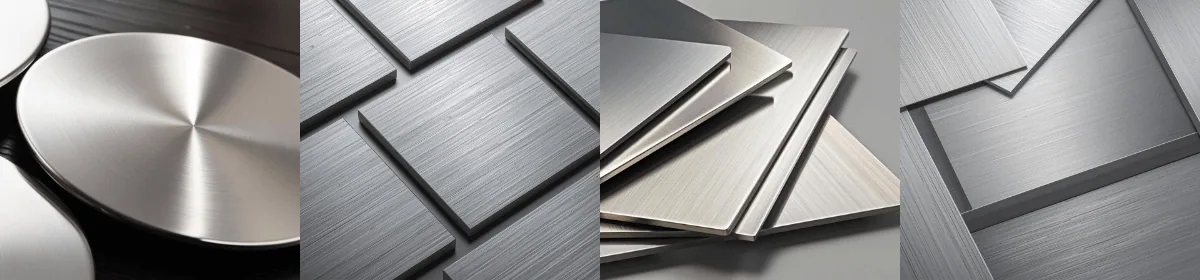
Alloy 926 Plates | UNS N08926 Super Austenitic Plates for Chemical, Oil & Gas, Marine, Pharma & Power
Table of Contents:
A phosphoric‑acid and fertiliser complex on a tidal coast had already cycled through 316L, 904L and rubber‑lined carbon steel in its contaminated sulfuric–phosphoric–chloride loops, yet each shutdown the inspectors mapped new pits around nozzles, weld overlays and tube sheets, and the finance team watched unplanned plate replacements eat into margins. When the reliability and procurement teams rebuilt the most abused reactor heads, flash cooler plates and seawater‑exposed manifolds in Alloy 926 Plates (UNS N08926, 1.4529), they upgraded to a 6‑moly super austenitic alloy developed as an enhanced version of 904L, with roughly 24–26% nickel, 19–21% chromium, about 6.5% molybdenum, copper and around 0.2% nitrogen; published data show tensile strength in the 650–850 MPa range, yield strength above 300 MPa, elongation above 40%, together with a pitting resistance equivalent number around 47, and over several campaigns thickness readings in those circuits stabilised where previous plates had repeatedly thinned and cracked.
Alloy 926 (also marketed as Incoloy 926, Cronifer 1925 hMo and UR 926) is a super‑austenitic stainless steel containing about 6–7% molybdenum and an addition of nitrogen, described as an enhanced version of Alloy 904L with significantly improved resistance to pitting and crevice corrosion in chloride‑containing environments. The nickel and chromium contents provide resistance to a wide range of corrosive environments, particularly non‑oxidising acids such as sulfuric and phosphoric, while the high molybdenum and nitrogen give excellent resistance to localised corrosion, and copper further improves sulfuric‑acid resistance.
For procurement heads, design and corrosion engineers, fabricators, OEM manufacturers and hardware or industrial supply stores serving chemical, oil & gas, marine, pharma and power‑generation assets, Alloy 926 plates offer a way to move up from 316L, 904L and many duplex grades when chloride levels, acid strength or temperature push those alloys to their limits but full nickel‑base alloys are hard to justify. Sources emphasise that Alloy 926 shows excellent resistance to pitting and crevice corrosion in halide media and sulfur‑containing hydrogen environments, very good resistance to chloride‑induced stress‑corrosion cracking and excellent general corrosion resistance in both oxidising and reducing media, including diluted sulfuric and phosphoric acids even when contaminated with chlorides. Mechanical data indicate tensile strengths around 690 MPa, yield strengths around 330 MPa and elongation about 42% in 2 in, which are higher than those of 316L and 904L and allow engineers to use thinner sections for a given design load.
Aurico Alloys LLP can support these environments as an affordable, authentic Alloy 926 Plates supplier, manufacturer and stockist in India with exports abroad, supplying plate to UNS N08926 / EN 1.4529 chemistry ranges under ASTM B625 / ASME SB‑625 with EN 10204 certification for EPC, OEM and MRO customers.
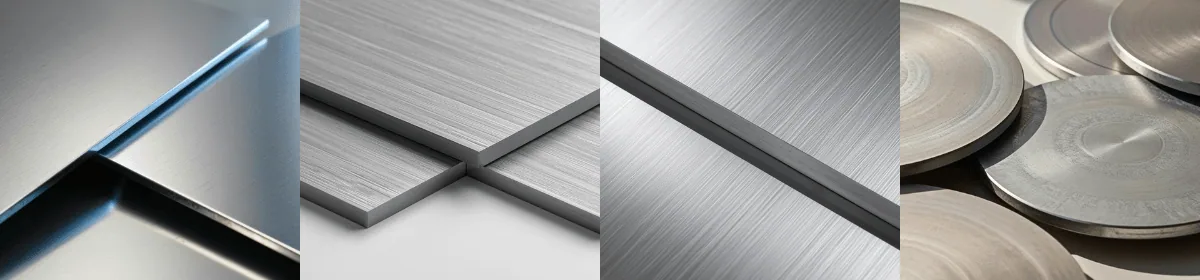
High-quality Alloy 926 Plates ready for industrial use.
Specification Overview
| Supplier & Role | Aurico Alloys LLP – Alloy 926 Plates supplier, stockist, exporter in India to abroad |
|---|---|
| Alloy Description | Super‑austenitic stainless steel with high Ni, Cr, Mo, Cu and nitrogen, developed as an enhanced 904L for aggressive chloride and acid service |
| UNS / EN / Werkstoff | UNS N08926, EN 1.4529, often described as X1NiCrMoCuN25‑20‑7 in EN notation |
| Main Plate Standards | ASTM B625 / ASME SB‑625 for plate, sheet and strip in the annealed temper covering UNS N08926 alongside N08031 and related alloys |
| Thickness Range | 4.75 mm – 150 mm |
| Pitting Resistance (PREN) | Approximately 47 based on high Mo and N content, supporting excellent pitting and crevice corrosion resistance in chlorides |
| Price | INR 1,500 – 2,500 per kg. Indicative USD 18 – 29 per kg; quoted against grade, form, size and quantity. |
UNS & Equivalent Grades
| Property | Value |
|---|---|
| UNS number | N08926 |
| Werkstoff / EN number | 1.4529 |
| EN designation | X1NiCrMoCuN25-20-7 |
| Density | 8.10 g/cm3 |
| Melting range | 1320-1390 °C |
| Magnetic permeability (relative - at 20 °C) | 1.001 |
| Plate, sheet and strip specification | ASTM B625 |
Identifiers and physical constants for Alloy 926. A dash means no such designation is published for this grade.
Stock & Product Availability
As an Alloy 926 Plates stockist, Aurico Alloys LLP can offer plate and sheet thicknesses suitable for acid reactor linings, absorber and scrubber shells, tube sheets, channel covers, seawater‑cooled exchangers, manifolds and structural plates in chemical, oil & gas, marine, pharma and power service, in line with thickness and width ranges used for ASTM B625 plate, sheet and strip. Available mechanical data for plate, strip and bar show yield strengths from 295–300 MPa minimum, tensile strength from around 600–850 MPa and elongation of at least 35–40% depending on product form, allowing designers to optimise wall thickness versus pressure with confidence.
Chemical Composition
| Element | Min (%) | Max (%) |
|---|---|---|
| Carbon (C) | — | 0.02 |
| Sulfur (S) | — | 0.010 |
| Nitrogen (N) | 0.15 | 0.25 |
| Chromium (Cr) | 20.0 | 21.0 |
| Nickel (Ni) | 24.0 | 26.0 |
| Manganese (Mn) | — | 1.0 |
| Silicon (Si) | — | 0.5 |
| Molybdenum (Mo) | 6.0 | 7.0 |
| Copper (Cu) | 0.5 | 1.5 |
| Phosphorus (P) | — | 0.03 |
Composition limits for Alloy 926. These are specification limits for the grade, not measured values for a lot; the mill test certificate supplied with your order states the actual analysis.
Mechanical & Physical Properties
| Property (Room Temperature, Typical Plate) | Typical Value – Alloy 926 |
|---|---|
| Ultimate Tensile Strength | ≈650–850 MPa for plate; one manufacturer lists about 690 MPa in comparative data |
| Yield Strength (0.2% offset) | Plate yield typically above 295–300 MPa; one table lists 330 MPa for comparison with 316 and 904L |
| Elongation | ≥35–40% in plate; comparative table shows ≈42% in 2 in gauge length |
| Hardness | <250 HB for many product forms; one comparison shows about 86 HRB |
| Modulus of Elasticity | ≈193–195 GPa |
| Pitting Resistance (PREN) | ≈47, reflecting high resistance to pitting and crevice corrosion in chlorides |
| Impact Toughness | Room‑temperature ISO‑V values reported at ≥150 J/cm², with ≥125 J/cm² at –196 °C for wrought forms |
Applications & Benefits
- Chemical & Oil & Gas: Alloy 926 plates are used in sulfuric‑ and phosphoric‑acid production equipment, salt plant evaporators, pollution‑control systems and acid gas handling, where high Mo and N deliver excellent resistance to localised attack and very good SCC resistance in chloride‑containing and H₂S‑containing environments.
- Marine & Power: In sea‑ and brackish‑water cooler shells, service water piping, feedwater heaters and offshore platform equipment, UNS N08926 / 1.4529 plates provide high resistance to pitting, crevice corrosion and SCC at temperatures up to about 400 °C in both oxidising and reducing media.
- Pharma & Food: Alloy 926 is applied in food and chemical processing, pulp‑mill bleaching and high‑purity plants where halides, mixed acids and high temperatures coexist but contamination limits and weldability requirements rule out many nickel‑base alloys.
FAQ & Search Trends
Global Export Destinations
We ship worldwide from Mumbai. See every destination we export to on our export markets page.
Domestic Supply Network
We deliver across India from our Mumbai stockyard. See every city we supply on our supply locations page.
Conclusion
Alloy 926 Plates from Aurico Alloys LLP, supplied to UNS N08926 / EN 1.4529 chemistry limits and ASTM B625 mechanical requirements, give chemical, oil & gas, marine, pharma and power‑generation users a high‑strength, 6‑moly super‑austenitic plate option that combines excellent resistance to sulfuric and phosphoric acids with outstanding pitting, crevice and stress‑corrosion performance in chloride‑ and seawater‑rich environments are your most critical acid, brine and seawater‑exposed assets still relying on lower‑alloy materials instead of optimised Alloy 926 plates?