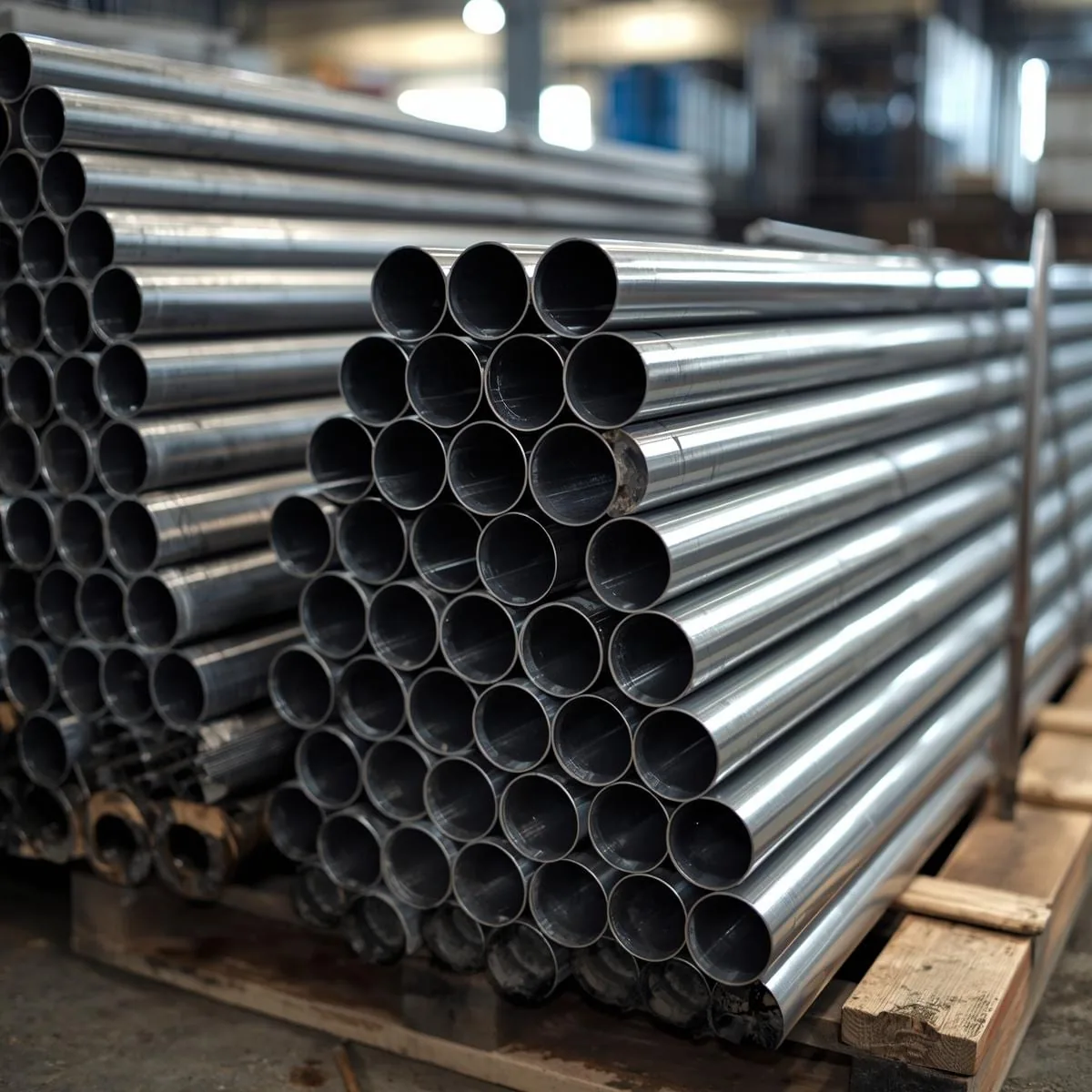
Nichrome Pipes for High-Temperature Oxidation Resistance and Stable Industrial Heat Service
Table of Contents:
For buyers comparing heat-resistant piping materials before purchase, Nichrome Pipes are most relevant where elevated temperature, oxidation, electrical resistance, and stable surface oxide behavior matter more than conventional pressure-piping economics.
Why high-temperature pipe failures push buyers toward Nichrome
In real plant service, failure in hot sections rarely starts as an obvious rupture; it often begins with rapid oxidation, heat scaling, thermal distortion, unstable resistance performance, or early surface degradation that reduces heater efficiency and shortens maintenance cycles.
That is why engineers specify Nichrome when the system must tolerate repeated heating, preserve surface integrity, and deliver dependable performance in furnaces, heat-treatment equipment, thermal processing systems, and fabricated hot-zone assemblies.
NiChrome 80, also identified as NiCr 80/20, is described as a high-grade austenitic alloy with superior life versus Fe-Cr-Al alloys because of the strong adhesion properties of its surface oxide, which is a practical selection advantage in long-duration heat service.
Specifications and standards
For commercial procurement, Nichrome Pipes are usually referenced by alloy chemistry, UNS designation, DIN or Werkstoff number, and the exact form supplied, because many Nichrome grades originated as resistance-heating alloys rather than mainstream process pipe materials.
One of the most widely cited grades is Nichrome 80, identified as UNS N06023 and Werkstoff 2.4869, with DIN 17470 and DIN 17471 appearing in published material specifications.
In international supply discussions, buyers may also request EN-style mill documentation and inspection records even where the primary product description is rooted in UNS and DIN references, especially for export orders and EPC review workflows.
Because ASTM standards for Nichrome as a dedicated pipe family are not as universally standardized in market literature as they are for alloys like Inconel or Monel, procurement teams should confirm the exact manufacturing, inspection, and acceptance standard with the supplier before release.
| Grade | UNS | DIN / W.Nr. | Commercial Standard Context |
|---|---|---|---|
| Nichrome 80 / NiCr 80/20 | UNS N06023 | W.Nr. 2.4869, DIN 17470 / 17471 | Commonly specified by chemistry and resistance-alloy designation; buyer should confirm inspection and product acceptance route |
| NiCr 70/30 | Commercial grade reference in trade literature | Not consistently standardized in retrieved pipe literature | Used mainly for heating and resistance applications |
| NiCr 60/15 | Commercial trade grade reference | UNS / DIN references vary by producer | Used where lower-cost resistance-alloy performance is acceptable |
Equivalent grades and buyer shorthand
From a procurement perspective, Nichrome is usually compared by nickel-chromium ratio rather than only by one trademarked family name, with NiCr 80/20 treated as the premium benchmark for higher operating temperature and longer oxidation life.
Commercial literature also lists alternate resistance-alloy families such as NiCr 70/30, NiCr 60/15, and iron-bearing Nichrome variants, but these are selected only after matching the service temperature, electrical behavior, and fabrication demand to the design brief.
How buyers typically position Nichrome grades
- NiCr 80/20: preferred for higher operating temperature, stable oxide formation, and long service life in heating applications.
- NiCr 70/30: used where slightly different resistivity and thermal behavior suit the application.
- NiCr 60/15 and iron-bearing variants: considered where cost sensitivity is higher and the thermal demand is less severe.
Product forms and availability
Although Nichrome is better known in wire and strip form, market supply also includes rods, coils, strips, ribbons, and commercially listed pipe forms, which supports OEM fabrication and custom hot-zone assembly work.
For industrial buying, Nichrome Pipes may be ordered for custom fabricated assemblies, heater sheaths, high-temperature ducts, thermal transfer sections, or specialized process lines where the designer wants material consistency across the entire heated zone.
Where a project also includes machined supports, connectors, or retaining hardware, buyers sometimes align the pipe package with a related forged material such as nickel alloy hex bars for assembly compatibility and fabrication convenience.
Chemical composition
Nichrome 80 is primarily a nickel-chromium alloy with controlled iron, manganese, and silicon additions, giving it the oxidation resistance and electrical stability that define its industrial use.
| Element | Nichrome 80 / NiCr 80-20 Composition |
|---|---|
| Nickel (Ni) | Balance |
| Chromium (Cr) | 20% - 23% |
| Iron (Fe) | Maximum 1.0% |
| Manganese (Mn) | Maximum 1.0% |
| Silicon (Si) | 1.00% - 1.50% |
This relatively clean Ni-Cr chemistry is one reason Nichrome develops a durable surface oxide and retains reliable high-temperature behavior in heating duty compared with lower-tier alternatives.
Mechanical and physical properties
Published data for Nichrome 80 identifies a highest application temperature of 1200°C, resistivity of 1.09 micro ohm-meter at 20°C, specific heat of 0.44 J/g°C, thermal conductivity of 60.3 KJ/m·h·°C, coefficient of linear expansion of 18.0 × 10⁻⁶/°C.
Commercial trade literature also describes Nichrome 80 as nonmagnetic, austenitic, and capable of elongation greater than 20%, which is useful for fabrication and forming in custom heater and hot-zone components.
| Property | Nichrome 80 Reference Value |
|---|---|
| Maximum Application Temperature | 1200°C |
| Resistivity at 20°C | 1.09 micro ohm-meter |
| Density | 8.40 g/cm³ |
| Specific Heat | 0.44 J/g°C |
| Thermal Conductivity | 60.3 KJ/m·h·°C |
| Coefficient of Expansion | 18.0 × 10⁻⁶/°C |
| Melting Temperature | 1400°C |
| Magnetic Behavior | Nonmagnetic |
What these properties mean in procurement terms
For buyers, Nichrome is less about traditional pressure-piping strength data and more about stable thermal performance, oxidation life, fabrication flexibility, and predictable electrical and physical behavior over repeated heat cycles.
Applications by industry
Chemical processing
In chemical processing, Nichrome is chosen for heated process equipment, furnace internals, thermal reactors, and controlled hot zones where oxidation resistance and thermal consistency matter more than simple corrosion-only performance.
Oil & Gas
In oil and gas, Nichrome is not typically the default bulk line-pipe alloy, but it is relevant for heater assemblies, thermal tracing elements, burner support sections, and engineered hot components exposed to repeated high heat.
Marine
In marine environments, Nichrome is usually selected for high-temperature electrical heating and controlled hot sections rather than ambient seawater piping, because its main value is oxidation resistance at red heat rather than broad chloride-service leadership.
Pharma
For pharmaceutical and laboratory systems, Nichrome is useful in sterilization equipment, controlled heating assemblies, and thermal instrumentation support where clean heat generation and stable high-temperature performance are required.
Power generation
Power generation and industrial heating systems use Nichrome in furnace elements, resistance heaters, and thermal-processing assemblies because the alloy combines high resistivity, oxidation resistance, and useful operating temperature capability.
OEM manufacturers, fabricators, procurement heads, and supply stores
OEM manufacturers and fabricators choose Nichrome for custom heat assemblies because it forms well when cold and remains stable in service, while procurement heads and industrial supply stores value its recognisable NiCr 80/20 specification language and established industrial use in heating systems.
Comparison with commonly used grades
Buyers comparing Nichrome Pipes usually evaluate them against Fe-Cr-Al heating alloys, stainless steels, and broader nickel alloys to decide whether the application needs oxidation life, electrical resistance, or conventional corrosion performance.
| Material | Main Advantage | Main Limitation | Typical Buyer Decision |
|---|---|---|---|
| Nichrome 80 / NiCr 80-20 | Stable oxide, high resistivity, nonmagnetic behavior, and long life in heat service | Not the default choice for mainstream pressure-pipe corrosion service | Chosen for high-temperature heating, furnace, and engineered thermal assemblies |
| Fe-Cr-Al Alloys | Often competitive for heating applications | Nichrome 80 is reported to have superior life because of better surface oxide adhesion | Chosen when the design prioritizes cost or different heating-alloy behavior |
| 304 / 316 Stainless Steel | More familiar for general fabrication and fluid handling | Lower electrical resistance and less suited to dedicated heating-alloy duty than Nichrome | Chosen for structural or corrosion service rather than resistance-heating function |
| Inconel / other nickel alloys | Strong high-temperature corrosion and strength performance | Usually costlier and not always selected when electrical resistance is the main functional requirement | Chosen when the duty combines pressure, corrosion, and temperature beyond Nichrome-style use |
In simple commercial terms, Nichrome is justified when the buyer needs a heat-performing alloy, not just a corrosion-resistant metal.
EEAT signals: testing, compliance, and export readiness
Serious industrial buyers expect Nichrome material supply to be backed by chemistry confirmation, grade traceability, dimensional control, and clear identification of the UNS or DIN grade being delivered.
Export-ready suppliers should be able to support mill test certificates, inspection records, heat traceability, packaging suitable for long-distance shipment, and EN-style documentation where the end customer requests European conformity language such as EN 10204 test certification.
What buyers typically verify
- UNS N06023, W.Nr. 2.4869, and DIN 17470 / 17471 where Nichrome 80 is specified.
- Chemical composition, especially nickel and chromium ranges.
- Physical property alignment for operating temperature, resistivity, and density.
- Inspection and documentation requirements for export or EPC-controlled projects.
Industry context and light market insight
Nichrome remains commercially important because heating systems, industrial furnaces, appliances, and laboratory equipment rely on alloys that can repeatedly operate at high temperature without rapid oxidation loss or unstable resistive behavior.
Published trade data shows Nichrome 80 operating up to 1200°C, which explains why buyers continue to specify it across multiple industrial heating segments despite the availability of alternative resistance-alloy families.
When the heated assembly also includes machined support components, some buyers naturally extend the order to a compatible wrought product such as nickel hex bars for fixtures, clamps, or fabricated support hardware.
Global Export Destinations
We ship worldwide from Mumbai. See every destination we export to on our export markets page.
Domestic Supply Network
We deliver across India from our Mumbai stockyard. See every city we supply on our supply locations page.
Conclusion
Nichrome Pipes are a technically sound choice when the application depends on high-temperature stability, oxide adhesion, consistent resistive behavior, and long service life in engineered heat environments rather than ordinary fluid-transport duty.
If your next project requires a material that can keep performing through repeated thermal cycles while maintaining oxidation resistance and process reliability, wouldn’t Nichrome be the smarter specification to review first?